

Why Protein Source Matters for Your Grocery Bill
Protein is the macronutrient most people worry about when cutting back on meat — and the most expensive nutrient to get wrong. A pound of boneless chicken breast can cost three to five times as much as a pound of dried lentils, yet both can anchor a filling, nutritious meal. The difference is knowing which plant-based and low-cost animal proteins deliver the most grams of protein per dollar, and how to actually cook them so they taste good.
This guide is a practical reference — not a push to go fully vegan. Think of it as a lookup table for when you're staring at the grocery aisle wondering whether to grab canned chickpeas or a pack of ground beef. For more context on why affordable food doesn't mean sacrificing nutrition, see why eating cheap doesn't have to mean eating badly.
| Protein per cup (cooked lentils) | ~18 grams (USDA FoodData Central) |
| Protein per cup (cooked chickpeas) | ~15 grams (USDA FoodData Central) |
| Protein per large egg | ~6 grams (USDA FoodData Central) |
| Protein per half-cup (firm tofu) | ~10 grams (USDA FoodData Central) |
| Protein per half-cup (tempeh) | ~15–16 grams (USDA FoodData Central) |
| Dry lentils yield when cooked | ~2.5x volume |
The Core Budget Proteins: A Practical Breakdown
Here's how the most accessible low-cost protein sources stack up on nutrition, versatility, and ease of cooking.
Lentils
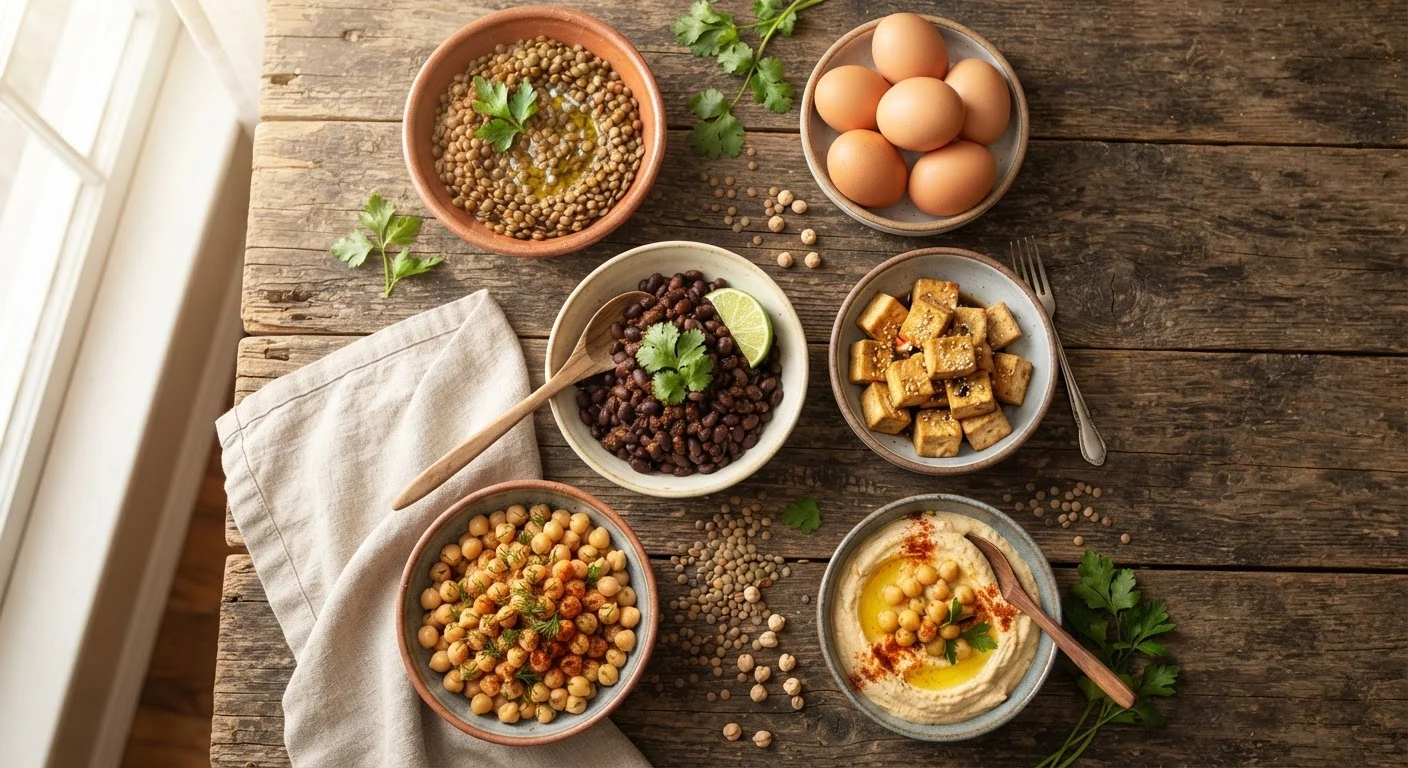
Dried lentils are among the most cost-effective proteins available. One cup dry yields about 18 grams of protein when cooked and expands to roughly 2.5 cups — feeding multiple servings for well under a dollar. Red lentils dissolve into soups and curries; green and brown lentils hold their shape for salads and grain bowls. They require no soaking and cook in 20–30 minutes.
Chickpeas
Canned chickpeas are ready to use immediately. Dried chickpeas cost less per serving but need overnight soaking. Either way, chickpeas deliver about 15 grams of protein per cooked cup along with significant fiber. Roast them for a crunchy snack, blend them into hummus, or toss them into stews. They absorb spices readily, which makes them easy to season however you prefer.
Black Beans and Kidney Beans
All canned beans follow roughly the same cost-per-protein logic. Black beans and kidney beans offer around 15 grams of protein per cup cooked, plus iron and folate. Buying dried in bulk brings the cost down further. Pair beans with rice or another grain to get a more complete amino acid profile — the two together cover what neither provides alone.
Eggs
Eggs are the most complete protein on this list — meaning they contain all essential amino acids in proportions the body can use efficiently. A single large egg provides about 6 grams of protein. A dozen eggs typically yields 12 servings at a cost that makes them one of the hardest proteins to beat on a per-gram basis. They cook fast, work at any meal, and keep for weeks in the refrigerator.
Tofu and Tempeh
Tofu and tempeh both derive from soybeans and offer complete protein. Firm tofu runs around 10 grams per half-cup serving; tempeh delivers closer to 15–16 grams and has a more assertive, nutty flavor. Tofu's mild taste makes it easy to use as a meat substitute when marinated and cooked in high heat — pan-frying or baking gives it a firmer texture. Tempeh can be crumbled like ground meat into tacos or stir-fries.
Once you have these staples stocked, pantry staples that form the foundation of frugal cooking can help you build meals around them with minimal additional spending. And if you're ready to cook in volume, batch cooking from scratch is worth exploring — lentils, beans, and tofu all hold up well for meal prep.
Getting the Most Out of These Proteins
A few practical habits make plant-based proteins go further:
- Buy dried over canned when you have time. Dried lentils and beans cost significantly less per serving than their canned equivalents. The trade-off is planning ahead — soak beans overnight and cook a big batch on the weekend.
- Season aggressively. Beans and tofu are bland on their own. Garlic, cumin, smoked paprika, soy sauce, and citrus are inexpensive ways to add depth without expensive sauces.
- Combine proteins within a meal. Mixing a small amount of eggs into a mostly-bean dish, or adding a little cheese to a lentil soup, rounds out the amino acid profile and makes the meal more satisfying without spending much.
- Cook once, eat multiple times. A pot of lentil soup or a tray of baked tofu can become lunches and dinners for several days. Planning meals around these proteins pairs naturally with planning meals around what's already in your kitchen.
None of these foods require special equipment or advanced cooking skills — just a pot, a pan, and a bit of patience. The payoff is a grocery bill that leaves more room in your budget without skimping on what your body actually needs.
This article is for general informational purposes only and is not a substitute for advice from a registered dietitian or qualified nutrition professional. Nutritional needs vary by individual.
The content provided on our blog site traverses numerous categories, offering readers valuable and practical information. Readers can use the editorial team’s research and data to gain more insights into their topics of interest. However, they are requested not to treat the articles as conclusive. The website team cannot be held responsible for differences in data or inaccuracies found across other platforms. Please also note that the site might also miss out on various schemes and offers available that the readers may find more beneficial than the ones we cover.