

Why Produce Prices Change Throughout the Year
Grocery prices for fruits and vegetables aren't random. They follow supply cycles tied to when crops are harvested. When a particular crop comes in at volume — strawberries in late spring, sweet corn in summer, butternut squash in fall — the market gets flooded and retail prices drop. When that same crop has to be shipped from another hemisphere during its off-season, costs climb to cover transportation, cold storage, and spoilage risk.
For budget-conscious shoppers, this cycle is useful information. A seasonal produce calendar turns that supply pattern into a simple, usable reference. Instead of guessing whether asparagus is a good buy in March or October, you can check and plan accordingly.
~20–50%
Typical price difference for in-season vs. out-of-season produce
General estimates from produce industry sources suggest significant price swings between peak harvest and off-season periods, though exact figures vary by crop and region.
$1,500+
Average US household annual spending on fruits and vegetables
According to USDA Economic Research Service data, produce represents a meaningful share of household food budgets — making even modest percentage savings worthwhile.
This isn't about eating only locally grown food or following a strict philosophy. It's a practical tool. When you buy what's abundant, you spend less — and usually get better flavor as a bonus.
How a Seasonal Produce Calendar Works
Most seasonal calendars are organized by month and list which fruits and vegetables are at or near peak harvest in a given region. They're widely available for free from state cooperative extension programs, farmers market associations, and agricultural agencies. Some are printed as simple charts; others are interactive online tools where you enter your zip code.
Here's the practical workflow: before you write your grocery list, glance at the calendar for your region. Note what's currently in season. Then build your meals — or at least your produce choices — around that list. This pairs naturally with a pantry-first approach to cooking. Our guide on pantry-first cooking explains how to combine what you already own with seasonal buys to minimize waste and spending simultaneously.
It also complements structured weekly planning. If you're already doing any form of meal prep or budget planning, adding a seasonal calendar check takes about two minutes and can meaningfully shift where your grocery dollars go.
What Changes Season by Season
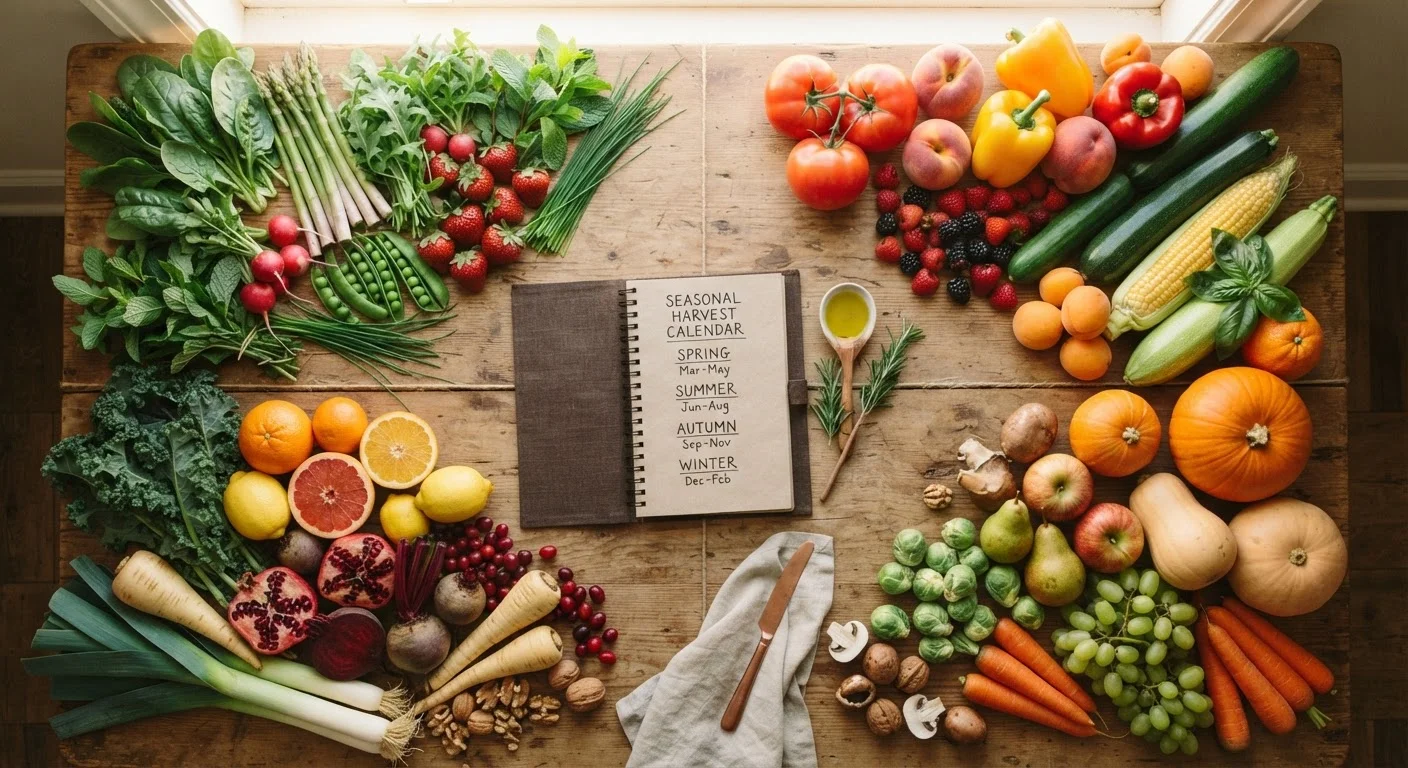
To make this concrete, here's a rough national overview — though your local calendar will be more accurate:
- Spring (March–May): Asparagus, peas, radishes, spinach, strawberries, artichokes
- Summer (June–August): Tomatoes, corn, zucchini, blueberries, peaches, cucumbers, green beans
- Fall (September–November): Winter squash, apples, pears, Brussels sprouts, kale, sweet potatoes
- Winter (December–February): Citrus fruits, root vegetables, cabbage, leeks, stored varieties of potatoes and onions
The depth of savings varies. Summer tomatoes from a local farm can cost a fraction of the price of imported winter tomatoes. Fall apples are typically abundant enough to be genuinely cheap at most stores. Understanding this rhythm is half the work.
If you're interested in growing some of this yourself, the seasonal planting calendar for beginner food gardeners is a useful companion resource.
Turning the Calendar Into Grocery Savings
The most direct way to use a seasonal calendar is to let it guide substitutions. If your recipe calls for bell peppers in January, that's an off-season buy. Swapping to a winter-friendly vegetable — cabbage, carrots, or a root vegetable — will cost less and taste better at that time of year.
This doesn't mean abandoning your favorite recipes. It means staying flexible about which vegetables fill a role. Most stir-fries, soups, and grain bowls accommodate a wide range of vegetables depending on what's in season.
Buy Extra When the Price Is Right
When an in-season item hits a low price, consider buying more than you need immediately and freezing the surplus. Blanched vegetables and sliced fruit freeze well and let you enjoy seasonal prices even after the harvest window closes. This works especially well with berries, corn, and leafy greens.
Seasonal shopping also integrates well with broader grocery budget habits. Our guide to planning meals around what's already in your kitchen covers how to audit your fridge and pantry before adding seasonal finds — a method that prevents buying more than you can use.
This article is for general informational purposes only and is not financial or nutritional advice. Prices and seasonal availability vary by region, retailer, and year. Consult local resources for produce calendars specific to your area.
Frequently Asked Questions
Many state cooperative extension programs publish free seasonal produce guides tailored to local growing conditions. Farmers market websites and USDA resources also offer regional charts. Searching for your state name plus 'seasonal produce calendar' is a reliable starting point.
Generally, yes. When a crop is harvested in volume, supply rises and retail prices tend to fall. Seasonal produce also travels shorter distances, reducing handling and storage costs passed to the consumer. That said, prices still vary by store and region, so it pays to compare.
Some research suggests that produce harvested at peak ripeness and sold quickly retains more nutrients than items shipped long distances and stored for extended periods. However, frozen produce is often a competitive alternative nutritionally. See our <a href="/budget-living/frugal-food-hacks/frozen-vs-fresh-produce-what-nutrition-science-actually-says">breakdown of frozen vs. fresh produce</a> for more detail.
A seasonal produce calendar tells shoppers when to buy specific fruits and vegetables based on harvest windows. A planting calendar tells gardeners when to sow seeds or transplant seedlings. They are related but serve different audiences and purposes.
Yes. Large grocery chains still price produce based on supply and shipping costs, which track closely with seasonal harvest cycles. Checking a seasonal calendar before you shop can help you identify which items are likely to be more affordable that week.
Start by checking what's in season in your area, then build weekly meals around those items rather than planning a menu first and shopping to match it. This flexible approach often saves more money over time — a trade-off explored in our article on <a href="/budget-living/everyday-money-wins/meal-planning-vs-flexible-shopping-which-costs-less-over-time">meal planning vs. flexible shopping</a>.
The content provided on our blog site traverses numerous categories, offering readers valuable and practical information. Readers can use the editorial team’s research and data to gain more insights into their topics of interest. However, they are requested not to treat the articles as conclusive. The website team cannot be held responsible for differences in data or inaccuracies found across other platforms. Please also note that the site might also miss out on various schemes and offers available that the readers may find more beneficial than the ones we cover.