

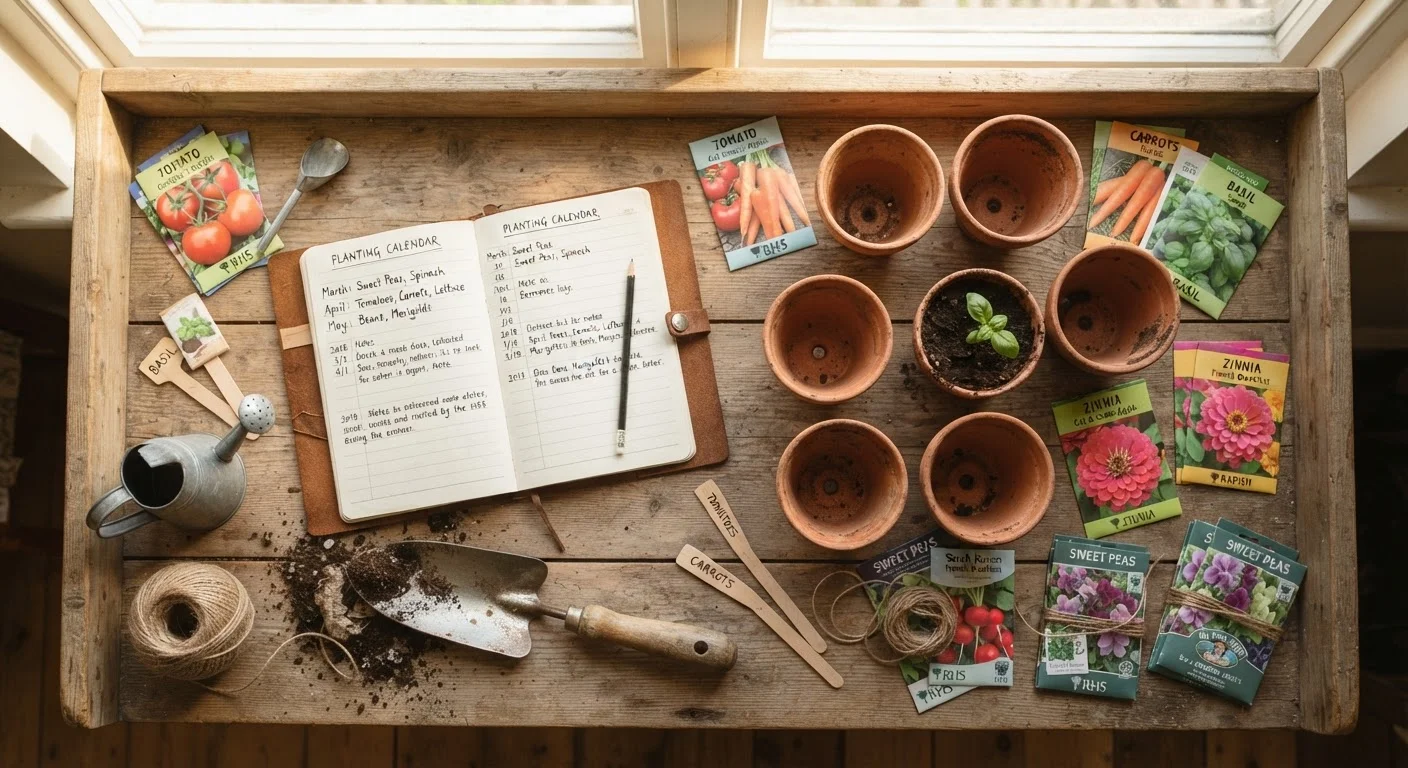
How to Use This Calendar
This planting calendar is organized by season and assumes a temperate US climate (roughly USDA Hardiness Zones 5–8). If you garden in the South, Deep South, or Pacific Coast, your frost-free window opens earlier — adjust each window two to four weeks forward. In northern states, shift two to four weeks later. Your local Cooperative Extension office publishes free, county-specific frost date data and is one of the most reliable free resources available to home gardeners.
Two terms anchor everything that follows. Direct sow means you push seeds straight into outdoor soil. Start indoors means seeds go into containers inside your home — usually four to eight weeks before your last expected frost — so young plants have a head start before transplanting outside.
For a deeper understanding of how crop types affect your long-term garden budget, see the difference between annual and perennial vegetables before you finalize your crop list.
Season-by-Season Planting Reference
Late Winter (January – February)
Indoor seed starting begins now for crops with long lead times. Start onions, leeks, and celery indoors six to ten weeks before your last frost. These are slow growers that benefit from the extra runway. Gather free or recycled containers — yogurt cups, cardboard egg cartons, and takeout trays all work.
Early Spring (March – April)
The ground is still cold, but cold-hardy crops thrive in it. Direct sow peas, spinach, kale, arugula, and radishes as soon as soil can be worked. Start tomatoes, peppers, and eggplant indoors six to eight weeks before your last frost. These warm-season crops must not go outside until nighttime temps reliably stay above 50°F.
Late Spring (May)
After your last frost date, transplant warm-season seedlings outdoors: tomatoes, peppers, squash, cucumbers, and basil. Direct sow beans, corn, and sunflowers. This is the busiest planting window of the year. If space is limited, space-efficient planting strategies can help you prioritize high-yield crops.
Summer (June – July)
Succession-sow fast crops every two to three weeks to extend harvests: lettuce, radishes, and bush beans are ideal candidates. In late July, start fall brassicas — broccoli, cabbage, and cauliflower — indoors or direct sow where space has opened up after early crops finish.
Late Summer / Early Fall (August – September)
Direct sow spinach, kale, beets, carrots, and turnips for fall harvest. These crops actually improve in flavor after a light frost. Plant garlic bulbs in October for harvest the following summer — it's one of the highest-value, lowest-effort crops a beginner can grow. To keep fall plantings thriving with minimal effort, a low-maintenance garden design can reduce your ongoing workload significantly.
Winter (November – December)
Growing season is over in most zones. Use this period to save seed from open-pollinated crops, refresh your soil with compost, and sketch next year's layout. Seed saving costs nothing and dramatically reduces future spending. Starting a food garden on almost no budget covers free and recycled resource strategies that pair well with off-season prep.
Planning Tips That Save Money
A planting calendar is most powerful when it drives purchasing decisions — not the other way around. Write down exactly which crops you plan to grow before buying any seeds or supplies. Overbuying seeds is one of the most common first-year budget mistakes.
Pair this calendar with a seasonal produce calendar to understand which crops are cheapest to buy versus most worth growing yourself. Seasonal produce calendars explain why timing affects grocery prices — the same logic applies to what you grow at home.
Finally, consider companion planting as a natural, free pest-management strategy. What companion planting actually does breaks down which pairings have genuine evidence behind them, so you don't waste space on combinations that don't deliver. More food from less ground — that's the budget gardener's core goal.
The content provided on our blog site traverses numerous categories, offering readers valuable and practical information. Readers can use the editorial team’s research and data to gain more insights into their topics of interest. However, they are requested not to treat the articles as conclusive. The website team cannot be held responsible for differences in data or inaccuracies found across other platforms. Please also note that the site might also miss out on various schemes and offers available that the readers may find more beneficial than the ones we cover.