

Our Verdict
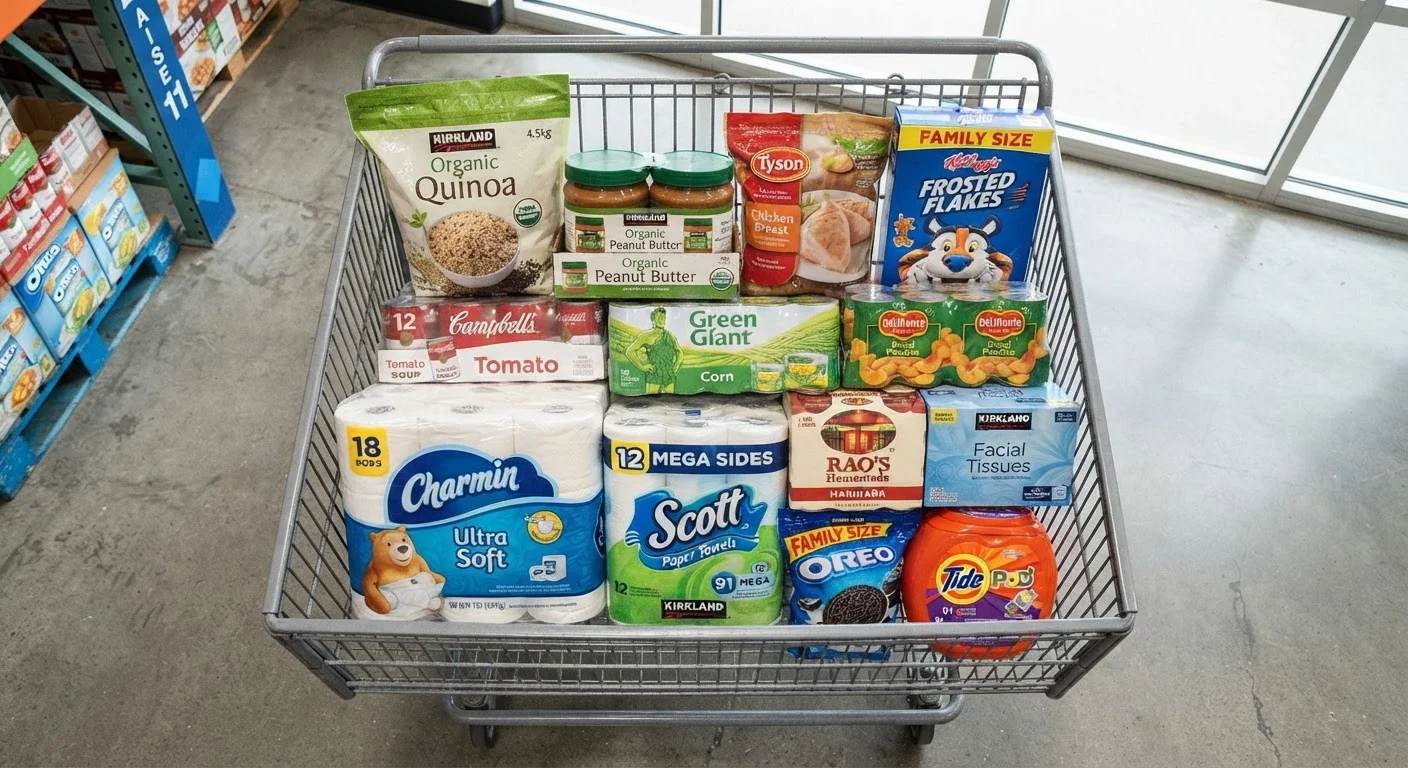
Bulk buying is a genuinely useful tool for cutting food and household costs, but it is not automatic savings. It rewards households with consistent usage habits, adequate storage, and the upfront cash to absorb larger purchases. When those conditions are not met, the per-unit savings evaporate — replaced by spoilage, wasted space, and money tied up in things you did not actually need.
Best for budget-conscious households with stable consumption habits, at least basic pantry storage, and a working meal plan who want to reduce routine grocery spending over time.
Why Bulk Buying Appeals — and Where the Logic Gets Fuzzy
The pitch for buying in bulk is simple: pay less per unit by purchasing more at once. That logic is real, but it is incomplete. The per-unit price only tells you what something costs on the shelf. It does not tell you what it costs in your home — factoring in spoilage, storage, and cash that is tied up instead of sitting in your account.
Bulk buying works like a forced commitment. You are betting that you will use every unit before it expires, spoils, or becomes irrelevant. When that bet pays off, the savings are tangible. When it does not, the discount you were chasing ends up in the trash. For a deeper look at the everyday habits that quietly inflate grocery bills, see common grocery habits that drain your budget.
When Bulk Buying Genuinely Works
There is a reliable set of conditions under which buying in bulk delivers on its promise.
Lower cost per unit on staples you actually use
For items like rice, dried legumes, oats, and cleaning supplies, the per-unit discount at bulk quantities is real and compounds over time with regular use.
Fewer shopping trips and less impulse spending
Buying staples in bulk reduces how often you need to visit a store, which lowers exposure to impulse purchases — one of the most consistent drivers of grocery budget creep.
Reliable buffer against price spikes
A well-stocked pantry of bulk non-perishables provides a cushion when individual item prices rise temporarily, letting you ride out increases without immediate impact.
Strong value on household and paper goods
Toilet paper, paper towels, dish soap, and laundry detergent do not expire on a meaningful timeline, making them among the most consistently efficient bulk purchases.
Non-perishables with long shelf lives — dried beans, rice, oats, pasta, canned goods, cleaning supplies, paper products — are the clearest wins. If you use them regularly and have somewhere to put them, the math almost always works in your favor. The same applies to frozen staples like protein, vegetables, and bread when you have adequate freezer space. Frozen produce in particular can be a nutritionally comparable and more affordable alternative to fresh — and buying it in bulk amplifies that advantage.
Bulk buying also pairs well with structured meal planning. If you know exactly how much of something you will use in the next four weeks, you can buy precisely enough to hit the per-unit savings without overcommitting. See how meal planning compares to flexible shopping in terms of real cost over time.
~30%
Average US household food waste by weight
The USDA estimates that US households waste roughly 30–40% of the food supply, much of it at the consumer level — a risk that bulk perishable purchases can amplify.
10–40%
Typical per-unit savings on bulk non-perishables
Consumer research generally finds bulk packaging offers 10–40% lower unit costs compared to standard sizes, though the range varies significantly by product category and retailer.
When Bulk Buying Backfires
The scenarios where bulk buying quietly costs more are just as predictable as the ones where it saves.
Perishables often spoil before you finish them
Fresh produce, dairy, and bakery items bought in large quantities frequently go bad before a household can use them, turning a per-unit discount into an actual per-unit loss.
Large upfront cost strains a tight monthly budget
A $50 or $80 bulk purchase may represent genuine long-term savings but can disrupt short-term cash flow for households managing a week-to-week budget.
Storage requirements are easy to underestimate
Without adequate pantry space, bulk items end up stored improperly — leading to accelerated spoilage, pest issues, or simply cluttering a small living space.
Encourages buying items you wouldn't otherwise use
The perceived value of a bulk deal can lead to purchasing products outside your normal rotation, resulting in waste when novelty wears off or circumstances change.
Unit price comparisons can be misleading
Bulk unit prices occasionally look lower than standard sizes but are actually undercut by store-brand alternatives — making the bulk option a worse deal than it appears.
Perishables are the most common trap. Buying a three-pound container of spinach sounds economical until half of it wilts before the week is out. The same dynamic applies to bulk bakery items, fresh herbs, dairy, and many proteins. The per-unit price looked attractive; the actual cost per unit consumed is often higher than a smaller package would have been.
There is also the category overlap with the sunk-cost problem. Once you have bought something in bulk, you may feel obligated to use it even when you no longer want it — eating the same meal repeatedly to avoid waste, or holding onto a cleaning product you stopped liking. This is a spending pattern worth recognizing, and it shares logic with the sunk-cost trap in budget purchases more broadly.
The Real Calculation Before You Buy
Before committing to a bulk purchase, three questions are worth asking honestly:
- Will I use all of this before it expires or degrades? Be realistic, not optimistic.
- Do I have space to store it properly? Improper storage accelerates spoilage and defeats the purpose.
- Does the upfront cost strain my budget right now? Spending $60 at once to save $12 over three months only works if that $60 is genuinely available.
It is also worth comparing the bulk unit price against store-brand alternatives in standard sizes. Sometimes a store-brand product in a regular package undercuts the bulk price entirely. For guidance on where store-brand swaps reliably hold up, this breakdown of store-brand versus name-brand groceries is a useful reference.
Bulk Buying and Cash Flow Are Separate Questions
Even when a bulk purchase would save money over time, it may not be the right move if the upfront cost would leave your account too thin for unexpected expenses. Savings strategies that work on paper can still create real financial stress if they are poorly timed. Prioritize keeping an adequate cash buffer before optimizing for per-unit price.
This article provides general consumer information and is not personalized financial advice. For guidance specific to your household budget or financial situation, consider consulting a qualified financial professional.
The content provided on our blog site traverses numerous categories, offering readers valuable and practical information. Readers can use the editorial team’s research and data to gain more insights into their topics of interest. However, they are requested not to treat the articles as conclusive. The website team cannot be held responsible for differences in data or inaccuracies found across other platforms. Please also note that the site might also miss out on various schemes and offers available that the readers may find more beneficial than the ones we cover.