

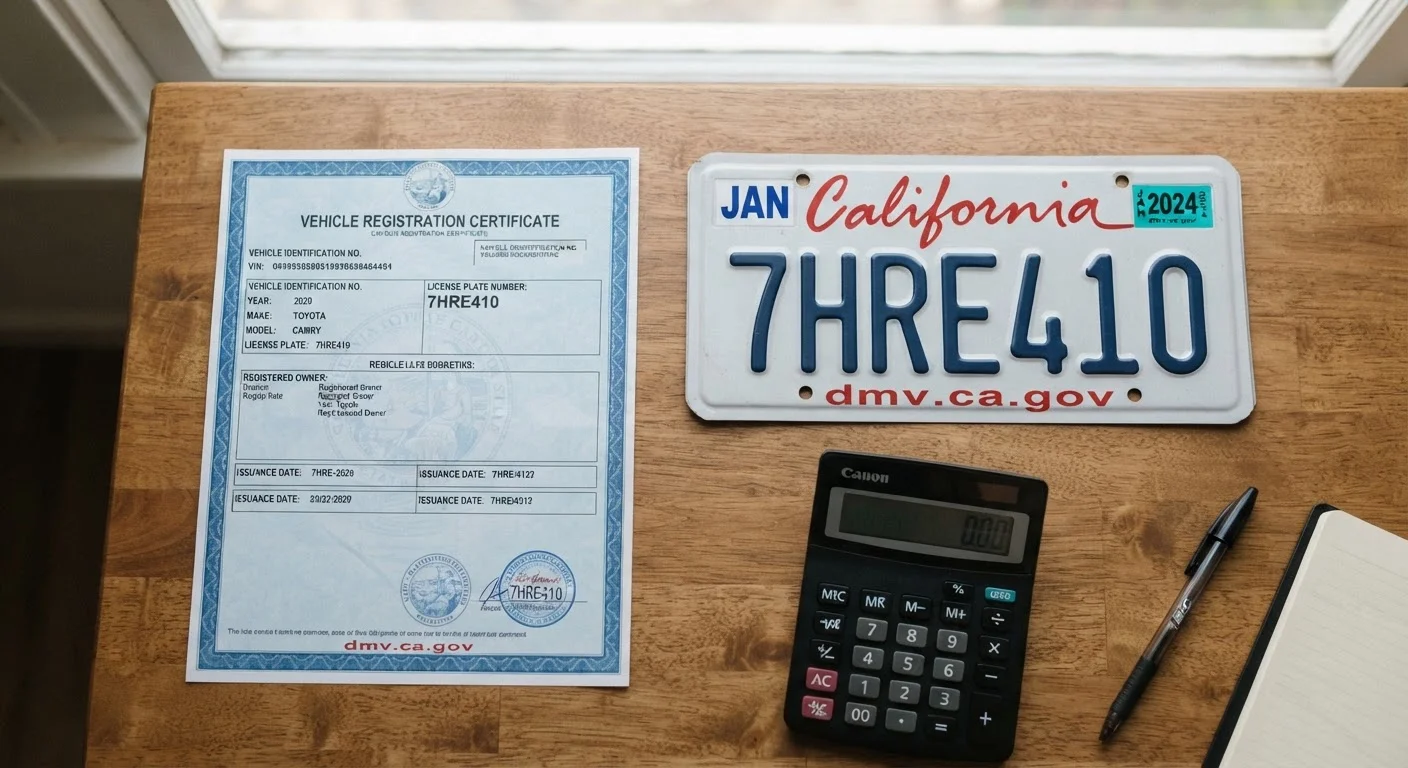
The Fees That Show Up Whether You're Ready or Not
Your car loan covers the vehicle. Government fees cover your right to put it on the road — and those are two very different buckets of money. Annual registration, title transfers, emissions inspections, and state road taxes are mandatory costs that land in your lap every year, regardless of how much you owe or how little you drive. Yet they rarely appear in the monthly payment calculator you used at the dealership.
If you want the full picture of what car ownership actually costs, these fees need a line in your budget. See what the numbers really look like once every expense category is counted.
Annual Vehicle Registration: The Baseline Cost
Every state requires you to register your vehicle, and that registration expires — usually annually or biannually. The fee structure varies significantly by state. Some states charge a flat fee (often $25–$75), while others calculate fees based on the vehicle's weight, age, or declared value. A few states, including California, tie registration fees to the car's market value, which means a newer or pricier vehicle costs more to keep registered.
Beyond the base registration fee, most states layer on additional surcharges: highway maintenance funds, county fees, and sometimes dedicated EV or hybrid surcharges. The total can range from under $50 in states like Montana to well over $200 in high-fee states. If you're building a realistic car budget, use a framework that accounts for these variable line items so you're not caught short when the renewal notice arrives.
Emissions Testing, Safety Inspections, and Other Mandatory Checks
About half of U.S. states require periodic emissions testing — sometimes called a smog check — as a condition of vehicle registration. Costs typically run $20–$50 per test, but if your vehicle fails, you could be looking at repair costs before you can legally renew your registration. Some states offer waivers or financial assistance for low-income drivers whose vehicles fail but are too costly to repair — worth checking locally if that applies to your situation.
Separate from emissions, many states require annual or biennial safety inspections covering brakes, lights, tires, and steering. Inspection fees are usually modest ($7–$40), but again, any required repairs before passing add to the real cost. Newer vehicles often receive inspection exemptions for the first few years.
If you've just purchased your first car and this feels like a lot to track, a plain-language overview of recurring ownership costs can help you organize everything in one place.
Title Fees, Transfer Taxes, and One-Time Government Charges
When you buy a vehicle — new or used — you typically pay a one-time title fee to transfer legal ownership into your name. These fees are usually $10–$100 depending on the state. Some states also charge a use tax or vehicle excise tax at the point of purchase, separate from sales tax. These can add several hundred dollars to the cost of buying, and they're often overlooked in headline price comparisons. Here's a fuller breakdown of what gets stacked on top of the sticker price.
Some counties and municipalities also add local registration surcharges or road improvement levies on top of state fees. The only way to know your exact number is to check your state's DMV fee schedule directly before budgeting.
This article provides general educational information about vehicle registration and government fees. It is not personalized financial or legal advice. Fee structures change over time and vary by state and county — verify current rates directly with your state's Department of Motor Vehicles or equivalent agency before making financial decisions.
The content provided on our blog site traverses numerous categories, offering readers valuable and practical information. Readers can use the editorial team’s research and data to gain more insights into their topics of interest. However, they are requested not to treat the articles as conclusive. The website team cannot be held responsible for differences in data or inaccuracies found across other platforms. Please also note that the site might also miss out on various schemes and offers available that the readers may find more beneficial than the ones we cover.