

Why Category Design Is Where Most Budgets Break Down
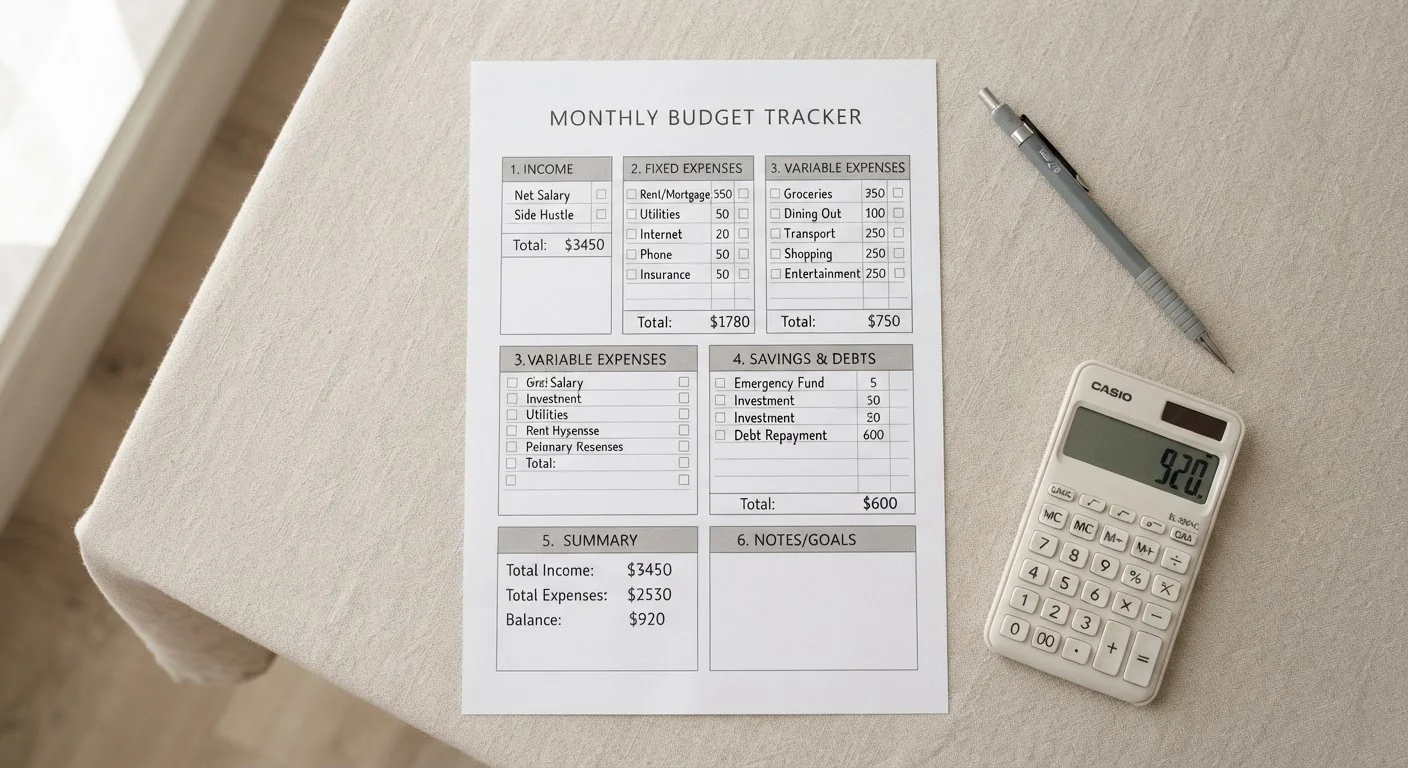
Most budgeting advice focuses on discipline — tracking every dollar, resisting impulse purchases, staying accountable. But before any of that, there's a quieter problem: category design. When spending categories don't match how you actually live, the whole system fights against you.
Too many categories and you spend more time filing transactions than understanding them. Too few and you lose the insight that makes budgeting worth doing. The goal is a category structure that's both accurate enough to be useful and simple enough that you'll actually maintain it.
Understanding how your expenses divide into fixed and variable types — explored in our overview of fixed vs. variable expenses — is the logical first step before you assign a single category name.
This Is General Financial Education
The guidance in this article is intended to provide general information about budgeting principles, not personalized financial advice. Everyone's financial situation is different. For decisions specific to your circumstances, consider consulting a qualified financial adviser or certified financial planner.
Core Practices for Building Your Category Structure
These practices aren't rules imposed from the outside — they're principles drawn from how sustainable budgeting actually works in practice. Apply them in order, and adjust freely based on your situation.
Start with five to seven broad categories, not twenty narrow ones.
Research on habit formation consistently shows that systems requiring fewer decisions are more likely to be sustained. A budget with too many line items creates cognitive overload, leading most people to abandon tracking altogether. Broad categories keep the overhead low while still giving you meaningful visibility.
Separate fixed expenses from variable ones before building any category list.
Fixed expenses — rent, insurance premiums, loan payments — stay the same each month and require little active management. Variable expenses — groceries, entertainment, gas — fluctuate and need regular attention. Treating them identically obscures where you actually have spending control. See our guide to fixed vs. variable expenses for a fuller breakdown.
Create one catch-all 'Miscellaneous' category and cap it deliberately.
Unexpected purchases — a birthday card, a replacement charger, a co-pay — will always occur. Without a designated container, these small expenses either blow up other categories or go untracked entirely. A capped miscellaneous category acknowledges real-world unpredictability without giving it unlimited space.
Name categories using your own language, not generic finance terms.
You're far more likely to maintain a budget that feels personal. Generic labels like 'Discretionary' or 'Sundries' can feel abstract and create confusion about where specific purchases belong. Clear, self-defined labels reduce the mental friction of assigning each transaction.
Audit and adjust your categories at the end of each month.
A category structure that works in January may be misaligned by April — seasonal changes, new habits, and lifestyle shifts all affect how money flows. Monthly reviews let you detect when a category is consistently over or under used, which is a signal to restructure rather than just try harder. Our monthly budget audit guide walks through this process step by step.
Common Category Groupings Worth Knowing
While your categories should reflect your personal spending, most household budgets naturally organize around a handful of universal areas:
- Housing: Rent or mortgage, utilities, renter's or homeowner's insurance
- Food: Groceries and dining out combined, or split if eating out is a major expense for you. Our Frugal Food Hacks hub covers strategies to reduce this category meaningfully.
- Transportation: Gas, public transit, parking, car maintenance
- Health: Insurance premiums, prescriptions, co-pays
- Savings & Debt Repayment: Emergency fund contributions, loan payments
- Discretionary: Entertainment, clothing, hobbies, personal care
This isn't a template to copy wholesale — it's a starting scaffold. Adjust for your life. Travelers, for instance, may need a dedicated travel category rather than folding it into discretionary; our article on common budget travel mistakes illustrates how hidden costs surface when spending isn't properly categorized.
Equally, if emotional spending is a pattern — stress purchases, boredom scrolling checkout — consider a small, explicit 'Guilt-Free Spending' category. It's less about permission and more about containment. For more on the triggers behind unplanned purchases, see our piece on recognizing emotional spending triggers.
Quick Wins to Start Simplifying Today
You don't need to rebuild your budget from scratch to improve how your categories work. These three immediate actions can make a real difference without requiring a complete overhaul.
Once your categories are in good shape, the next step is building the habit of tracking consistently — without it becoming a chore. Our practical spending tracking guide covers sustainable methods for doing exactly that.
This article provides general budgeting information for educational purposes only and does not constitute personalized financial advice. Consult a qualified financial professional for guidance tailored to your individual circumstances.
The content provided on our blog site traverses numerous categories, offering readers valuable and practical information. Readers can use the editorial team’s research and data to gain more insights into their topics of interest. However, they are requested not to treat the articles as conclusive. The website team cannot be held responsible for differences in data or inaccuracies found across other platforms. Please also note that the site might also miss out on various schemes and offers available that the readers may find more beneficial than the ones we cover.