

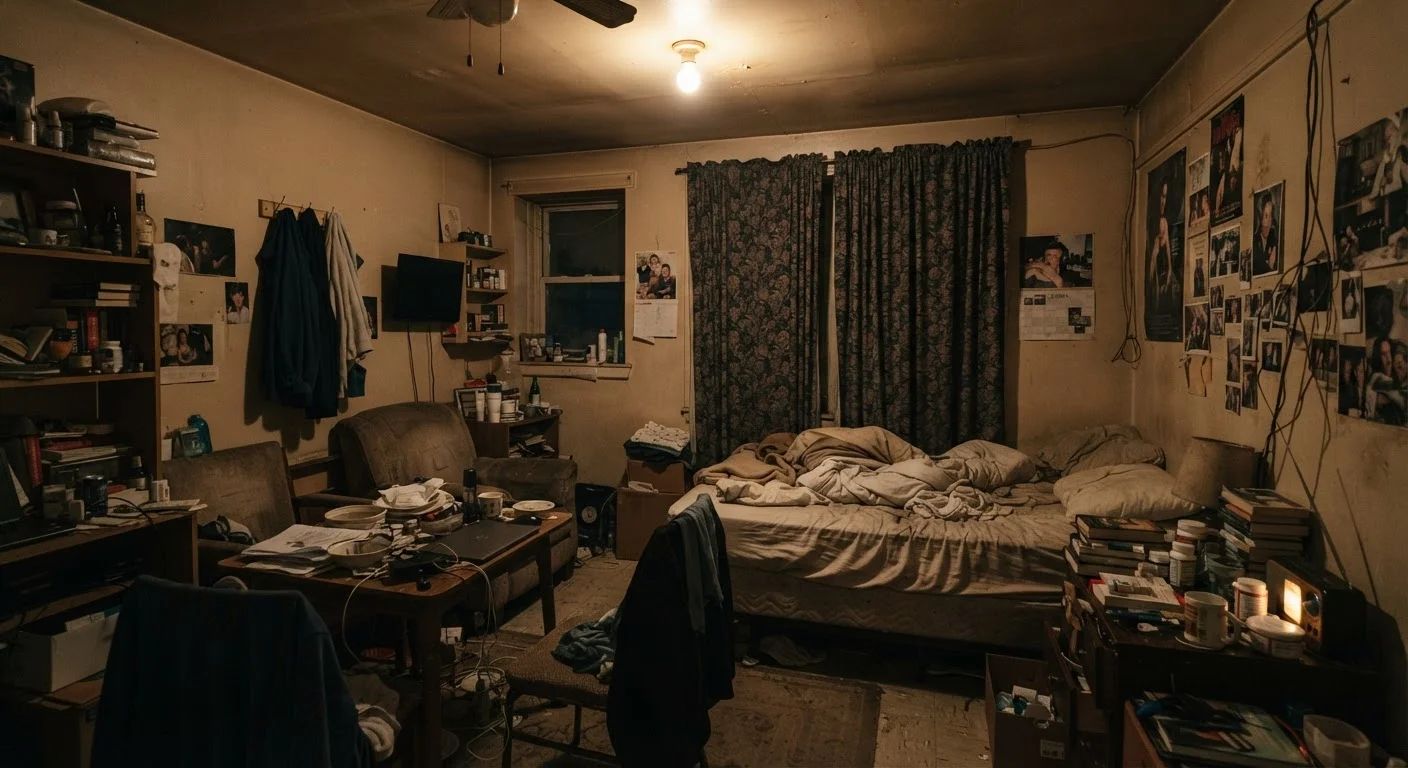
The Real Reasons Your Small Room Feels Closed In
A room that feels stuffy isn't necessarily too small — it's almost always suffering from one or more fixable problems: restricted airflow, visual overload, poor light distribution, or furniture choices that cut the space into disconnected pieces. Understanding which problem you're actually dealing with is the first step, and it's often a different diagnosis than most people expect.
The discomfort of a stuffy room is both physical and psychological. Stale, warm air genuinely does affect how alert and comfortable you feel. But visual cues — a blocked sightline, a ceiling that feels low, walls packed with objects — amplify that physical sensation significantly. Research on how the brain processes cramped environments shows that visual clutter alone can trigger a stress response similar to actual confinement.
Below are the most common mistakes that make small rooms feel worse than their dimensions require — and concrete ways to address each one without a full renovation or a large budget.
Blaming square footage when the real culprit is blocked or absent airflow.
Why it happens: When a room feels uncomfortable, the instinct is to assume it's simply too small. But stuffiness is primarily a function of how air moves — or doesn't — through a space.
Using heavy, floor-length curtains that block both light and airflow near windows.
Why it happens: Thick drapes are marketed for privacy and insulation, and many renters install them without considering how much light they absorb even when 'open.'
Choosing oversized or low-profile furniture that visually crowds the room and impedes airflow at floor level.
Why it happens: Bulky sofas and squat, solid-skirted furniture look proportional on a showroom floor but consume visual and physical space in compact rooms.
Ignoring vertical space while trying to solve a horizontal crowding problem.
Why it happens: Most people instinctively think about floor space, spreading furniture outward and leaving walls bare from mid-height to ceiling.
Layering too many textiles — rugs, throws, cushion covers, and upholstered wall panels — without considering how they trap warmth and moisture.
Why it happens: Soft furnishings are an accessible, renter-friendly way to add personality, but there's a tipping point where they make a room feel padded and airless.
Assuming wall color alone will fix the stuffiness when the real issue is light quality and distribution.
Why it happens: The advice 'paint it white to make it feel bigger' is so pervasive that many people try it and are surprised when the room still feels closed in.
Building Better Airflow and Light on a Practical Budget
Ventilation Is a Safety Issue, Not Just Comfort
Chronic poor airflow can contribute to elevated indoor humidity, mold growth, and buildup of volatile organic compounds (VOCs) from common household materials. If a room consistently feels damp and stuffy regardless of what you try, consult a qualified HVAC professional or building inspector — don't rely solely on décor fixes.
Most of the fixes that address stuffiness cost little or nothing. Rearranging furniture to clear air vents, reassessing your curtain situation, or simply developing a habit of cross-ventilation each morning are zero-cost interventions. When small purchases do make sense — a clip-on fan, a lighter-weight rug, a second lamp — the returns in daily comfort tend to far outweigh the spend.
Think of your room as a system rather than a collection of objects. Airflow, light, and visual weight interact constantly. A change in one area — say, swapping out dense curtains — often produces visible improvements in another, like making the furniture feel less crowded. If you're also working to maximise how your belongings are stored, getting under-bed storage organised can remove visible clutter from floor level, which compounds the feeling of openness. Similarly, decisions like choosing between open shelving and closed cabinets affect both airflow patterns and how dense a room feels at eye level.
The goal isn't to make a small room look like something it isn't. It's to remove the unnecessary friction — physical and visual — that makes it feel worse than it is. Most small rooms, addressed thoughtfully, are genuinely comfortable. The square footage is rarely the problem.
The content provided on our blog site traverses numerous categories, offering readers valuable and practical information. Readers can use the editorial team’s research and data to gain more insights into their topics of interest. However, they are requested not to treat the articles as conclusive. The website team cannot be held responsible for differences in data or inaccuracies found across other platforms. Please also note that the site might also miss out on various schemes and offers available that the readers may find more beneficial than the ones we cover.