

Start here
Why Batch Cooking Actually Works on a Budget
Next
What to Cook in Bulk (Without Getting Bored)
Then
How to Run a Realistic Batch Cooking Session
Then
Storing and Rotating Your Batch Meals Safely
Keep going
Keeping It Going Without Burning Out
Why Batch Cooking Actually Works on a Budget
Batch cooking has a reputation for being either a wellness influencer hobby or something your grandparents did out of necessity. In practice, it's one of the most effective tools for cutting your weekly food spend — not because it's glamorous, but because it removes the conditions that cause overspending in the first place.
When you come home tired and the fridge looks empty, you order takeout. When you buy a bunch of fresh produce without a plan, it wilts. Batch cooking attacks both problems directly by making the low-effort, low-cost option the default one.
The financial logic is straightforward: buying ingredients in larger quantities typically costs less per serving than buying the same items in smaller portions. Cooking them all at once means less energy use, less packaging waste, and far fewer mid-week grocery runs where impulse purchases happen. This connects naturally to the habits covered in a complete framework for low-budget meal planning.
Batch cooking
Preparing a large quantity of food at one time — usually once a week — so you have ready-to-use ingredients or meals available on busier days.
Component cooking
Cooking individual ingredients (like grains, roasted vegetables, or a protein) separately so they can be mixed and matched into different meals throughout the week.
Temperature danger zone
The range of temperatures (roughly 40°F to 140°F) where bacteria multiply most rapidly in food. Cooked food should spend as little time as possible in this range.
Pantry-first method
A habit of checking what you already have in your pantry, fridge, and freezer before planning meals or shopping — reducing waste and unnecessary purchases.
Bulk staples
Dry goods like dried beans, lentils, rice, or oats that are inexpensive to buy in larger quantities and form the foundation of many low-cost meals.
What to Cook in Bulk (Without Getting Bored)
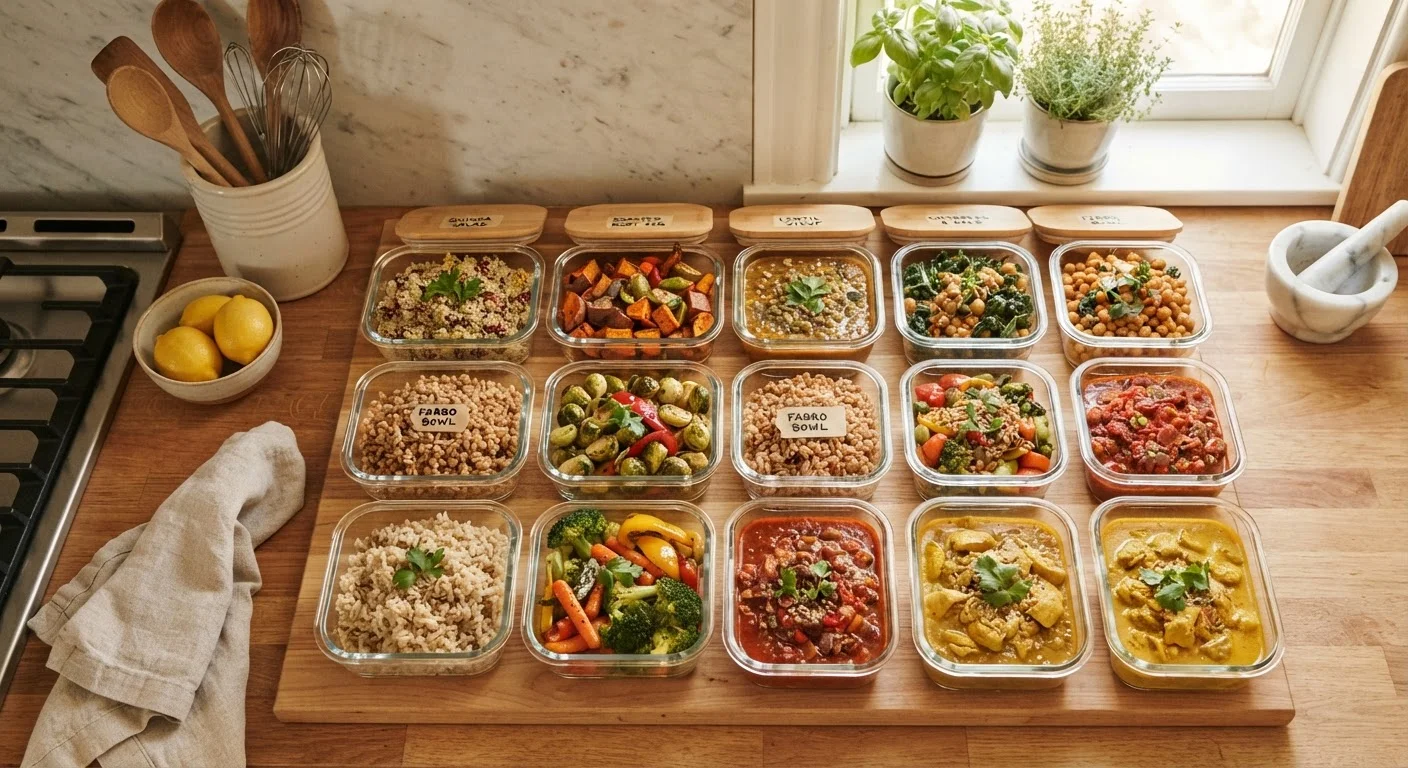
The mistake most people make is batch cooking full meals — the same soup or casserole five days in a row. That gets old fast. A better approach is to cook components rather than finished dishes.
Think in three categories:
- Grains and legumes: A large pot of brown rice, lentils, or dried beans costs very little and forms the base of dozens of meals. These also freeze well.
- Roasted or cooked vegetables: A sheet pan of whatever is cheapest that week — sweet potato, broccoli, zucchini, cauliflower — roasts in about 25 minutes and goes into wraps, grain bowls, eggs, or soups.
- A protein base: Hard-boiled eggs, a tray of baked chicken thighs, or a batch of cooked ground meat gives you something to build around without committing to one flavor profile all week.
Mix and match these three categories across the week and you'll rarely feel like you're eating the same thing twice. For help identifying the staple dry goods that make this system work, see pantry staples that form the foundation of frugal cooking.
How to Run a Realistic Batch Cooking Session
You don't need a full Sunday afternoon. Most people can accomplish a functional batch session in 90 to 120 minutes if they plan ahead. Here's a simple structure that works:
- Decide before you shop. Know what three or four components you're cooking before you go to the store. Use what's already in your kitchen as your starting point — buying duplicates of what you already own wastes money.
- Start the slowest item first. Dried beans or grains take the longest. Get them on the stove first, then work on faster items while they cook.
- Use the oven and stove simultaneously. While something simmers, something else roasts. Parallel cooking is what compresses the time.
- Cool before you store. Don't put hot food directly into sealed containers — it creates condensation that accelerates spoilage. Give cooked food 20–30 minutes to cool on the counter.
Keep a simple session checklist
Before you start, write down the three components you're making and which cooking method each uses (stovetop, oven, or no-cook). This prevents the mid-session freeze where you can't remember what you were doing. Five minutes of planning at the start saves fifteen minutes of confusion later.
Storing and Rotating Your Batch Meals Safely
Food safety isn't optional, and it's directly tied to whether batch cooking saves or wastes money. The general guidance from food safety authorities is that cooked food should not sit in the temperature danger zone (roughly 40°F–140°F) for more than two hours, and should be refrigerated promptly after cooling.
Practical storage rules to keep in mind:
- Label containers with the date they were made — it takes five seconds and prevents guessing.
- Store items you'll use first at the front of the fridge, and freeze anything you won't reach within four days.
- Freeze in single-serving or two-serving portions rather than one giant block. This lets you thaw only what you need and reduces waste.
- Soups, grains, and legumes freeze especially well. Cooked leafy greens and crispy roasted vegetables do not — eat those fresh within two to three days.
Good storage habits are also central to the pantry-first cooking approach, which treats waste prevention as a direct financial strategy.
Keeping It Going Without Burning Out
Most people who try batch cooking once and quit didn't fail at cooking — they overcomplicated the system. A few adjustments make it sustainable:
- Start with three items, not ten. Pick one grain, one vegetable, one protein. Do that consistently for a month before adding more.
- Lower the bar. A batch session doesn't have to produce beautiful containers of perfectly portioned meals. It just has to mean you eat at home more than you did last week.
- Rotate your base ingredients. Swap rice for farro one week. Try black beans instead of lentils. Small swaps prevent the monotony that kills the habit.
- Treat it as a financial habit, not just a cooking one. Connecting your prep sessions to your grocery budget — as discussed in meal planning as a financial habit — keeps the motivation practical rather than aspirational.
Batch cooking doesn't require perfection or a Pinterest-worthy kitchen. It just requires showing up once a week with a plan and a pot. That consistency, more than any particular recipe, is what moves the needle on your food budget over time.
Frequently Asked Questions
Most cooked grains, legumes, and roasted vegetables keep safely for 4–5 days in an airtight container in the refrigerator. Cooked meat and fish are better used within 3–4 days. When in doubt, freeze portions you won't eat within that window.
No. A large pot, a sheet pan, and a set of airtight containers are enough to get started. A slow cooker or Instant Pot can speed things up over time, but they're not required for a beginner session.
Savings vary by household size, location, and current habits, so no specific figure applies universally. In general, buying staple ingredients in bulk and reducing takeout and impulse purchases are the main levers. Individual results will differ.
Cook components, not complete dishes. A batch of plain rice, roasted chickpeas, and a simple sauce can become a grain bowl one night, a wrap the next, and a soup add-in the third. Variety comes from how you assemble, not from cooking something new every day.
Yes — it may actually be more valuable for solo cooks, since buying whole packages of ingredients often means cooking the full amount anyway. Scale down portions and lean heavily on the freezer to avoid waste.
A small kitchen limits what you can do simultaneously, but a single pot or sheet pan is all you need for one item. Stagger your batch sessions — cook grains today, roast vegetables tomorrow — rather than trying to do everything at once.
The content provided on our blog site traverses numerous categories, offering readers valuable and practical information. Readers can use the editorial team’s research and data to gain more insights into their topics of interest. However, they are requested not to treat the articles as conclusive. The website team cannot be held responsible for differences in data or inaccuracies found across other platforms. Please also note that the site might also miss out on various schemes and offers available that the readers may find more beneficial than the ones we cover.