

Why Fluids Are Your Engine's First Line of Defense
Most expensive engine repairs share a common origin: a fluid that ran low, got contaminated, or broke down long before the driver noticed. The good news is that checking your car's critical fluids is one of the few maintenance tasks you can do yourself, at no cost, in about ten minutes. It's also one of the highest-leverage habits you can build — catching a problem early means a $20 top-off instead of a $4,000 engine rebuild.
This reference guide covers the four fluids responsible for the most preventable damage: engine oil, coolant, brake fluid, and transmission fluid. For each one, you'll find what it does, what warning signs to look for, and how often to check it. If you want a broader picture of how maintenance costs stack up, see why maintenance costs catch so many car owners off guard.
The Four Fluids That Matter Most
Engine Oil
What it does: Lubricates metal parts, reduces friction-generated heat, and carries away tiny metal particles and combustion byproducts. Without adequate oil, engine components grind against each other and fail rapidly — sometimes within minutes at highway speeds.
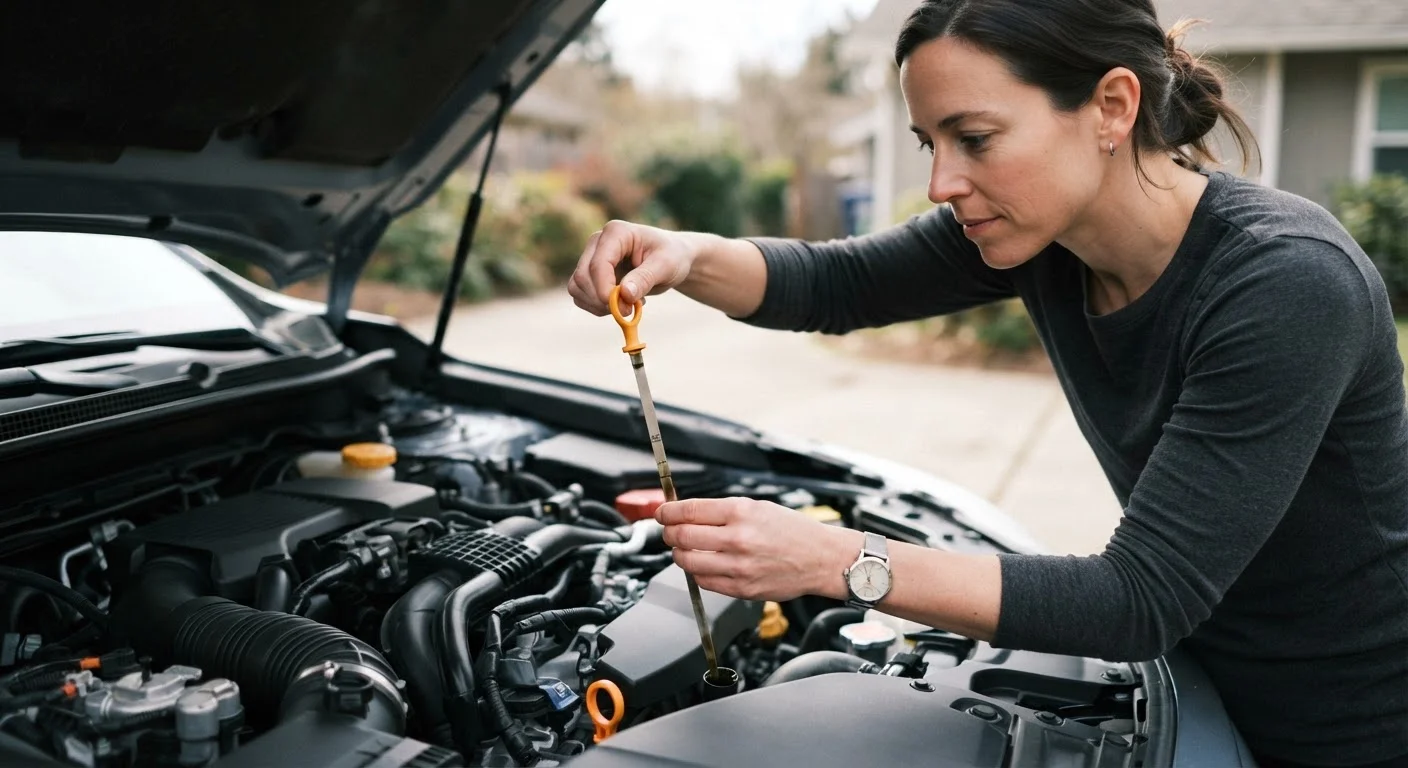
How to check it: With the engine off and the car on level ground, pull the dipstick, wipe it clean, reinsert fully, pull again, and read the level. Healthy oil sits between the two marks and looks amber to dark brown. Black, gritty, or milky oil (which can indicate coolant mixing in) is a flag to address immediately.
How often: Check the level monthly and before any long road trip. Change interval varies by vehicle and oil type — consult your owner's manual rather than defaulting to the old 3,000-mile rule, which is outdated for most modern engines. See common car maintenance myths for more on that.
Coolant (Antifreeze)
What it does: Regulates engine temperature by absorbing heat and dissipating it through the radiator. It also prevents freezing in winter and corrosion inside cooling system components year-round.
How to check it: Never open the radiator cap on a hot engine — serious burns can result. Instead, check the translucent plastic overflow reservoir beside the radiator. The level should fall between the MIN and MAX lines. Coolant should look bright green, orange, or pink depending on type. Rusty, oily, or murky coolant needs flushing.
How often: Visually inspect the reservoir monthly. A full coolant flush is typically recommended every 2–5 years, but check your owner's manual for the specific interval.
Brake Fluid
What it does: Transmits the force from your brake pedal through hydraulic lines to the brake calipers. It's hygroscopic — meaning it absorbs moisture from the air over time — which lowers its boiling point and can cause brake fade or failure under hard braking.
How to check it: The brake fluid reservoir is a small translucent container near the firewall on the driver's side. The level should be between MIN and MAX. Fresh brake fluid is nearly clear or light yellow; dark brown fluid has absorbed too much moisture and should be replaced. A spongy brake pedal is a serious warning sign — have the system inspected by a qualified mechanic immediately.
How often: Check the level every 3 months. Most manufacturers recommend replacing brake fluid every 2 years regardless of mileage. This is one of the most commonly neglected fluids.
Transmission Fluid
What it does: Lubricates and cools the transmission's gears and clutch packs. Low or degraded transmission fluid is one of the leading causes of transmission failure — a repair that routinely runs $2,000–$5,000 or more.
How to check it: Many automatic transmissions have a dipstick similar to the oil dipstick (consult your owner's manual for location). Some newer vehicles have sealed transmissions with no dipstick — these require a dealer or shop to check. Healthy fluid is red or pink and slightly sweet-smelling. Brown or burnt-smelling fluid needs attention.
How often: Check every 6 months if your vehicle has an accessible dipstick. Change intervals range from 30,000 to 60,000 miles for conventional fluid, and longer for full synthetic — always defer to your owner's manual.
Keeping these checks as part of a regular routine connects directly to fuel economy maintenance checks — a well-maintained engine burns less gas. For a prioritized view of which tasks matter most when money is tight, see car maintenance on a budget.
This article is for general informational purposes only and does not constitute professional mechanical or financial advice. Always consult your vehicle's owner's manual and a qualified mechanic for guidance specific to your vehicle. For decisions about vehicle repair costs and your personal finances, consider speaking with a licensed professional.
The content provided on our blog site traverses numerous categories, offering readers valuable and practical information. Readers can use the editorial team’s research and data to gain more insights into their topics of interest. However, they are requested not to treat the articles as conclusive. The website team cannot be held responsible for differences in data or inaccuracies found across other platforms. Please also note that the site might also miss out on various schemes and offers available that the readers may find more beneficial than the ones we cover.