

The Real Math Behind a Skipped Oil Change
An oil change typically costs between $30 and $80 depending on your vehicle and the type of oil it requires. That's a real expense when money is tight — so it's tempting to push it off a few thousand extra miles, or skip it entirely for a season. The logic feels sound: the car is still running, so what's the harm?
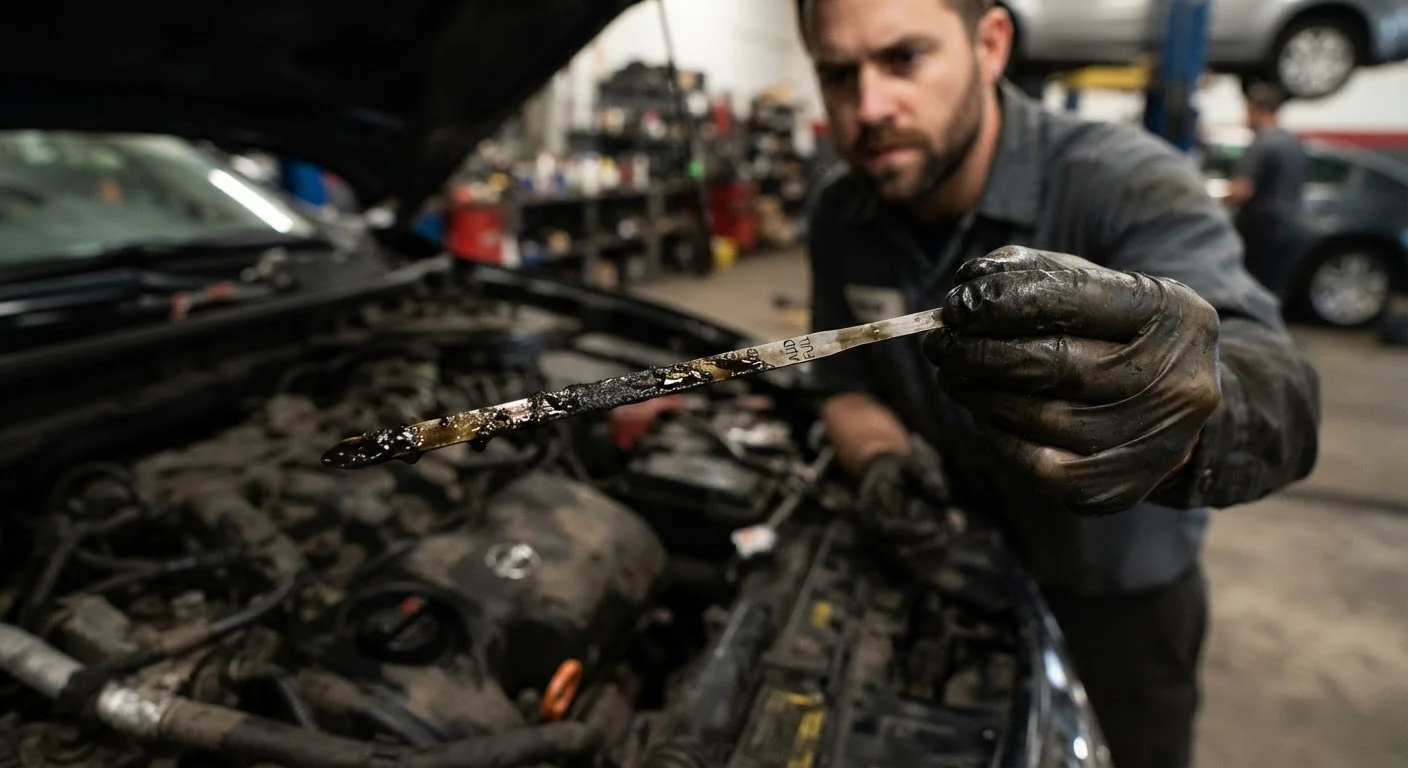
The harm is what's happening inside the engine you can't see. Oil doesn't just lubricate — it also absorbs heat, neutralizes acids produced by combustion, and carries microscopic metal particles and contaminants away from critical engine parts. As it ages, it loses all three of those functions. What starts as clean, amber-colored fluid gradually becomes dark, thick, and acidic. At that point, it's doing more damage than protection.
According to AAA's vehicle research, engine repairs rank among the most expensive unplanned automotive costs drivers face. A single engine-related repair — like replacing a seized camshaft or worn rod bearings — can run $1,500 to $4,000. A full engine replacement can easily exceed $7,000 to $10,000 on many common vehicles. An oil change, by comparison, costs less than a dinner out.
$30–$80
Typical oil change cost
Average cost range for a standard oil change at an independent shop, varying by oil type and vehicle.
$7,000+
Potential engine replacement cost
Engine replacement costs on many common passenger vehicles can exceed this figure, according to automotive repair cost databases.
5,000–10,000 mi
Modern oil change interval range
Most vehicles using synthetic oil fall within this interval; always verify with your owner's manual.
What Degraded Oil Does to Your Engine
When oil breaks down, it stops flowing freely and starts forming deposits. These deposits — commonly called engine sludge — can clog narrow oil passages and block flow to the components that need lubrication most: the camshaft, crankshaft bearings, and valve train. Once oil flow is restricted, those parts begin to wear metal-on-metal, generating heat and tiny particles that compound the damage with every revolution of the engine.
This isn't a slow, gradual process that gives you plenty of warning. In some cases — especially in engines already running hot or under stress — sludge buildup can cause significant damage within a relatively short window of neglect. City drivers are at particular risk: short trips don't allow the engine to fully warm up, which means condensation and fuel contaminants mix into the oil rather than burning off. Driving patterns affect maintenance costs in ways most people don't expect, and frequent short trips are one of the harder ones on oil life.
Drivers who also skip other fluid checks often find the damage compounds further. Overlooked maintenance items like coolant condition and PCV valve function directly affect how quickly oil degrades.
How to Know When Your Oil Actually Needs Changing
The old "every 3,000 miles" rule is largely outdated for most modern vehicles. Today's synthetic and synthetic-blend oils, combined with tighter engine tolerances, allow many cars to go 5,000 to 10,000 miles between changes — sometimes more. The correct interval for your car is in your owner's manual, not on a sticker from a quick-lube shop. Common car maintenance myths like the 3,000-mile rule can actually cost you money if they push unnecessary service.
Many newer vehicles include an oil life monitoring system that calculates a change interval based on your actual driving conditions — not just mileage. These systems factor in temperature, load, and trip length, making them more accurate than a fixed schedule. If your car has one, use it.
If your car is older or doesn't have a monitoring system, checking the dipstick monthly takes about 90 seconds. Look at the level and the color. Clean oil is amber to light brown; oil that looks black and feels gritty between your fingers is overdue. If it smells burnt, that's another signal.
Check Your Oil Between Changes
Pull the dipstick every month or every few fill-ups — it takes under two minutes. Look at both the level and the color. Low oil level combined with dark, gritty texture means you're overdue. Catching this early gives you time to schedule a change before damage occurs.
Understanding the full picture of routine maintenance — including what oil changes fit into overall upkeep costs — is covered in our overview of why maintenance costs catch car owners off guard. For help deciding which tasks to prioritize when cash is limited, see car maintenance on a budget.
This article is for general informational purposes only and does not constitute personalized mechanical or financial advice. Consult a licensed mechanic for guidance specific to your vehicle.
Frequently Asked Questions
Oil thickens and breaks down, forming a sludge that restricts flow through the engine. Metal surfaces lose adequate lubrication, causing accelerated wear on components like camshafts and bearings. Over time, this can lead to overheating, seized components, or full engine failure.
It depends on your vehicle, oil type, and driving conditions. Most modern cars using full synthetic oil can go 7,500–10,000 miles between changes. Your owner's manual is the most accurate source for your specific vehicle — general rules of thumb can lead you astray.
Going slightly over — by a few hundred miles — is unlikely to cause immediate damage in a healthy engine using quality oil. Making it a pattern, however, shortens engine life meaningfully. The cost of consistency is low; the cost of neglect adds up quickly.
Failing to follow the manufacturer's maintenance schedule can give a dealer grounds to deny warranty claims related to engine damage. You don't have to use the dealership for oil changes, but you should keep records proving you maintained the car properly.
Common signs include a lit oil pressure or maintenance reminder warning light, dark or gritty oil on the dipstick, a ticking or knocking sound from the engine, and reduced fuel efficiency. If you notice any of these, check your oil level and condition promptly.
The content provided on our blog site traverses numerous categories, offering readers valuable and practical information. Readers can use the editorial team’s research and data to gain more insights into their topics of interest. However, they are requested not to treat the articles as conclusive. The website team cannot be held responsible for differences in data or inaccuracies found across other platforms. Please also note that the site might also miss out on various schemes and offers available that the readers may find more beneficial than the ones we cover.