

Our Verdict
Composting is one of the most cost-effective ways a home gardener can build soil health over time. The upfront learning curve is real, but the ongoing effort is modest once a routine is established, and the payoff — free, high-quality organic matter — is hard to beat on a tight budget.
Ideal for renters or homeowners with any outdoor space who are actively growing food or building a garden from scratch and want to reduce both waste and gardening costs.
What Composting Actually Is
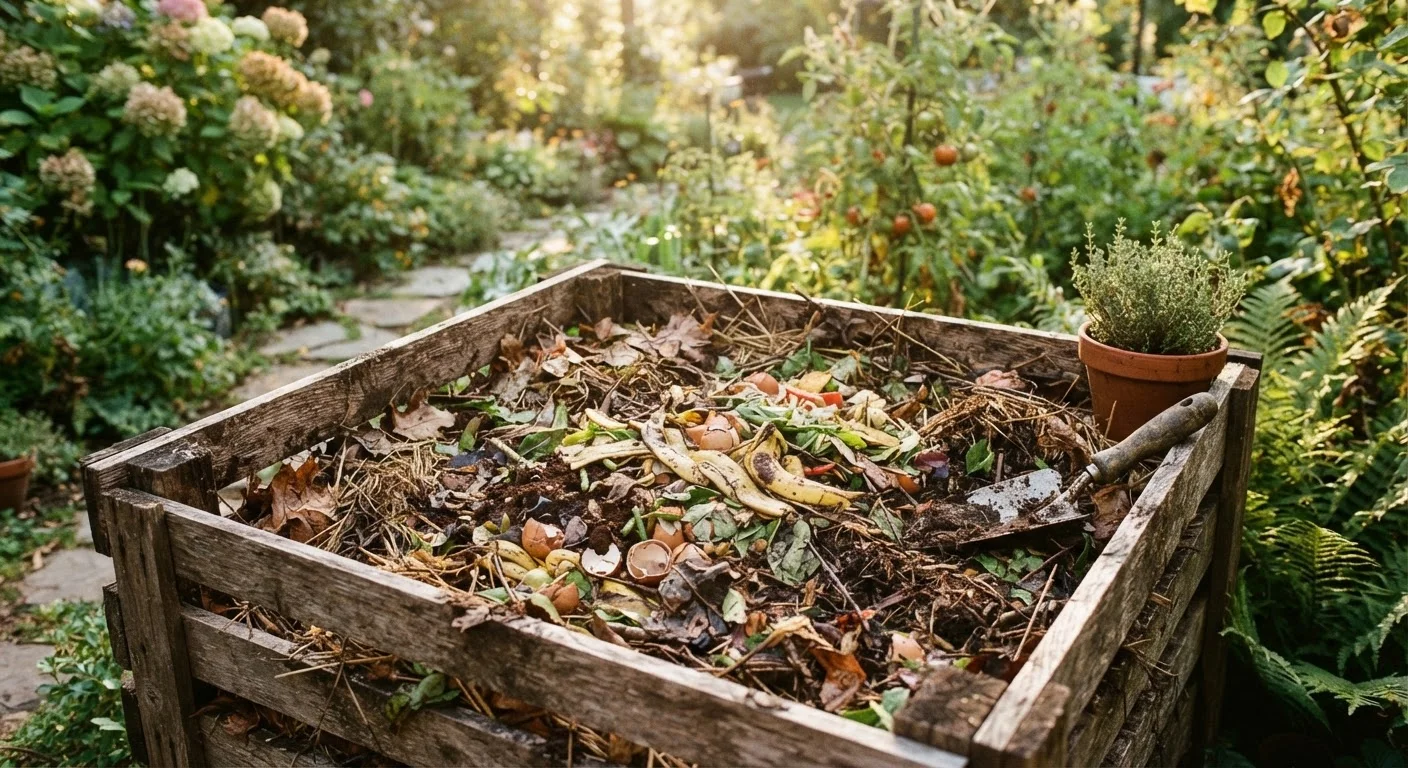
Composting is the managed decomposition of organic material — fruit and vegetable scraps, coffee grounds, cardboard, yard clippings — into a dark, crumbly substance called humus (not to be confused with hummus). Humus is essentially stabilised organic matter that improves soil structure, feeds beneficial microorganisms, and slowly releases nutrients that plants can absorb.
The process is biological: bacteria, fungi, and small invertebrates break down organic material over time. Your job as a composter is simply to create conditions where those organisms thrive — the right mix of carbon-rich and nitrogen-rich materials, adequate moisture, and occasional aeration.
Two categories of ingredients power the system:
- Greens (nitrogen-rich): fruit scraps, vegetable peelings, coffee grounds, fresh grass clippings
- Browns (carbon-rich): dried leaves, cardboard, paper bags, straw, wood chips
A rough guideline is a 3:1 ratio of browns to greens by volume. Too many greens and the pile turns slimy and smells; too many browns and decomposition stalls. Getting this balance roughly right is the core skill of composting. For a deeper look at how compost fits into a broader soil-building strategy, see free and low-cost ways to enrich garden soil.
How to Get Started Without Spending Much
The most common barrier is assuming you need a purpose-built bin or a large yard. You don't. Options range from a simple open pile in a corner of your outdoor space to a repurposed wooden pallet enclosure or a drilled plastic storage tote for balcony use. Many municipalities also offer subsidised or free compost bins — worth checking with your local waste authority before purchasing anything.
Basic steps to begin:
- Choose a location. A shaded or partially shaded spot with reasonable drainage works well. Avoid placing directly against a wooden fence or structure.
- Start layering. Begin with a 4–6 inch layer of coarse browns (straw, wood chips, shredded cardboard) to promote airflow at the base.
- Add greens and browns alternately. Each time you add kitchen scraps, cover with a layer of dry brown material roughly three times the volume.
- Keep it moist but not wet. The pile should feel like a wrung-out sponge. In dry climates, you may need to water occasionally.
- Turn it periodically. Aerating with a garden fork every one to two weeks accelerates decomposition. A passive pile that's never turned still works — it just takes longer.
If you're building a food garden from little, composting pairs naturally with other zero-cost approaches. Starting a food garden on almost nothing covers complementary strategies in detail.
Eliminates the need to buy commercial fertiliser
Finished compost provides a balanced slow-release nutrient profile that can replace or significantly reduce synthetic fertiliser use, a genuine cost saving over a growing season.
Improves soil structure over time
Adding compost to garden beds improves drainage in clay soils and water retention in sandy soils, reducing both plant stress and watering frequency.
Reduces household food waste
The average US household throws away a significant portion of the food it buys. Composting diverts vegetable peelings, eggshells, and coffee grounds from landfill into a productive cycle.
Requires minimal ongoing financial investment
Once set up — even with a repurposed bin — composting costs nothing to maintain. The inputs are materials you'd otherwise discard.
Supports a healthier garden ecosystem
Compost introduces beneficial microbes and organic matter that support soil biodiversity, which in turn helps plants resist disease and pests with less intervention.
Honest Drawbacks Worth Knowing
Composting isn't universally convenient. Before committing, it helps to weigh the real limitations alongside the benefits.
Takes two to six months to produce usable compost
Unlike buying a bag of fertiliser, composting requires patience. A cold or passive pile can take even longer, which means planning ahead rather than addressing soil needs immediately.
Can attract pests if managed incorrectly
Adding meat, dairy, or oily food scraps — or leaving greens uncovered — can draw rodents or flies. Proper layering and a lidded bin largely prevent this, but it requires consistent habits.
Requires outdoor or dedicated indoor space
Apartment dwellers without balconies or access to communal outdoor areas face a genuine barrier, as a traditional pile isn't practical in most indoor settings.
Odour problems arise when the balance is off
An ammonia or sulphur smell signals too many greens or anaerobic conditions. While fixable by adding browns and turning the pile, it can be off-putting until resolved.
No outdoor space? Try vermicomposting
If outdoor space is truly unavailable, vermicomposting — composting with red wiggler worms in a small sealed bin — is a viable indoor alternative. The bin can fit under a kitchen sink or in a closet, produces nutrient-dense liquid fertiliser as a byproduct, and processes scraps faster than a traditional pile. It does require maintaining a living worm population, which is an added consideration.
If outdoor space is truly unavailable, vermicomposting — composting with red wiggler worms in a small sealed bin — is a viable indoor alternative. The bin can fit under a kitchen sink or in a closet, produces nutrient-dense liquid fertiliser as a byproduct, and processes scraps faster than a traditional pile. It does require maintaining a living worm population, which is an added consideration.
Is the Effort Actually Worth It?
For a budget-minded gardener, the return on composting is genuinely strong. Finished compost can replace purchased potting mix amendments, reduce or eliminate the need for synthetic fertiliser, and improve soil water retention — meaning less frequent watering. Over a single growing season, a working compost pile can offset a meaningful share of what you'd otherwise spend on soil inputs.
~30%
Household waste that is compostable
The US EPA estimates that food and yard waste together make up roughly 30% of what households throw away, much of which could be composted instead.
2–6 months
Time to finished compost (active pile)
An actively managed pile that is turned regularly and kept moist can yield finished compost in as little as two months under warm conditions; a passive pile typically takes longer.
The time investment is also lower than most people expect. Once a system is established, adding scraps and browns takes under five minutes a day. Turning the pile takes perhaps 10–15 minutes every couple of weeks. This is not a high-maintenance practice.
The clearest case against composting is if you have no usable outdoor space and no interest in vermicomposting, or if you're not yet gardening actively — in which case the compost output has nowhere to go. But if you're growing food or improving soil, it quickly becomes a core habit. See how compost integrates into a low-maintenance garden design for practical applications. You can also explore how kitchen scraps can directly grow new plants as a complementary zero-waste approach.
The content provided on our blog site traverses numerous categories, offering readers valuable and practical information. Readers can use the editorial team’s research and data to gain more insights into their topics of interest. However, they are requested not to treat the articles as conclusive. The website team cannot be held responsible for differences in data or inaccuracies found across other platforms. Please also note that the site might also miss out on various schemes and offers available that the readers may find more beneficial than the ones we cover.