

Start here
Why a Zero-Budget Garden Is More Achievable Than You Think
Next
Where to Find Free or Nearly Free Seeds and Starts
Then
Using Recycled Containers and Found Materials
Build your base
Building Decent Soil Without Spending Much
Choose wisely
Which Crops Give You the Most Return for the Least Effort
Keep it growing
Keeping Your Garden Going Without Ongoing Costs
Why a Zero-Budget Garden Is More Achievable Than You Think
Most gardening advice assumes you'll be buying things: seed packets, premium potting mix, raised bed kits, fancy tools. For people on a tight budget, that assumption is a barrier before a single seed hits soil. But gardening culture has drifted far from its roots — humans have grown food in marginal conditions with minimal resources for thousands of years.
The real inputs a food garden needs are simple: light, water, soil with some organic matter, and seeds. Everything else is optional. Once you reframe the challenge around what you actually need versus what the gardening industry wants you to buy, the whole endeavor becomes far more accessible.
This guide focuses on practical methods for starting from almost zero — sourcing seeds for free, using containers you already own, building soil cheaply, and choosing crops that reward beginners quickly. Whether you have a small backyard, a fire escape, or just a south-facing windowsill, the principles are the same.
Open-pollinated seeds
Seeds from plants that were pollinated naturally, producing offspring with the same traits. You can save and replant these seeds reliably, unlike hybrid seeds which may not grow true to the parent plant.
Seed library
A community program, often run through a public library, that lends seeds to gardeners who then return saved seeds after the growing season — creating a shared, self-replenishing supply.
Bolting
When a plant shifts its energy from producing leaves or fruit to producing flowers and seeds. For seed-saving, letting a plant bolt is useful; for eating, it's best harvested before this happens.
Leaf mold
A type of organic matter created by leaving fallen leaves to decompose over several months. It improves soil structure and moisture retention without any cost.
Direct sow
Planting seeds directly into the ground or container where they'll grow to maturity, rather than starting them indoors in trays and transplanting later.
Drainage
The ability of a container or soil to allow excess water to escape. Without adequate drainage, roots sit in waterlogged conditions and rot, killing the plant.
Where to Find Free or Nearly Free Seeds and Starts
Seeds are the smallest cost in gardening — but they're often the first place people spend unnecessarily. Here's where to look before you open your wallet:
- Seed libraries: Many public libraries in the US now run seed lending programs. You borrow seeds, grow the plants, save seeds from a few, and return them. It's genuinely free.
- Community seed swaps: Local gardening groups, neighborhood Facebook groups, and platforms like Nextdoor regularly host swaps, especially in spring. You may have nothing to trade yet — many swappers will give to a beginner anyway.
- Kitchen scraps: Garlic cloves, dried bean seeds, squash seeds from a grocery store squash, and sprouting potatoes are all viable starts. Our article on turning kitchen scraps into a thriving garden covers which scraps work reliably and how to prepare them.
- Neighbor generosity: Gardeners who save seeds often have more than they can use. Ask around — most experienced gardeners are happy to share.
When you do buy seeds, prioritize open-pollinated or heirloom varieties. These produce seeds you can save and replant, meaning one small purchase goes on giving for years.
Using Recycled Containers and Found Materials
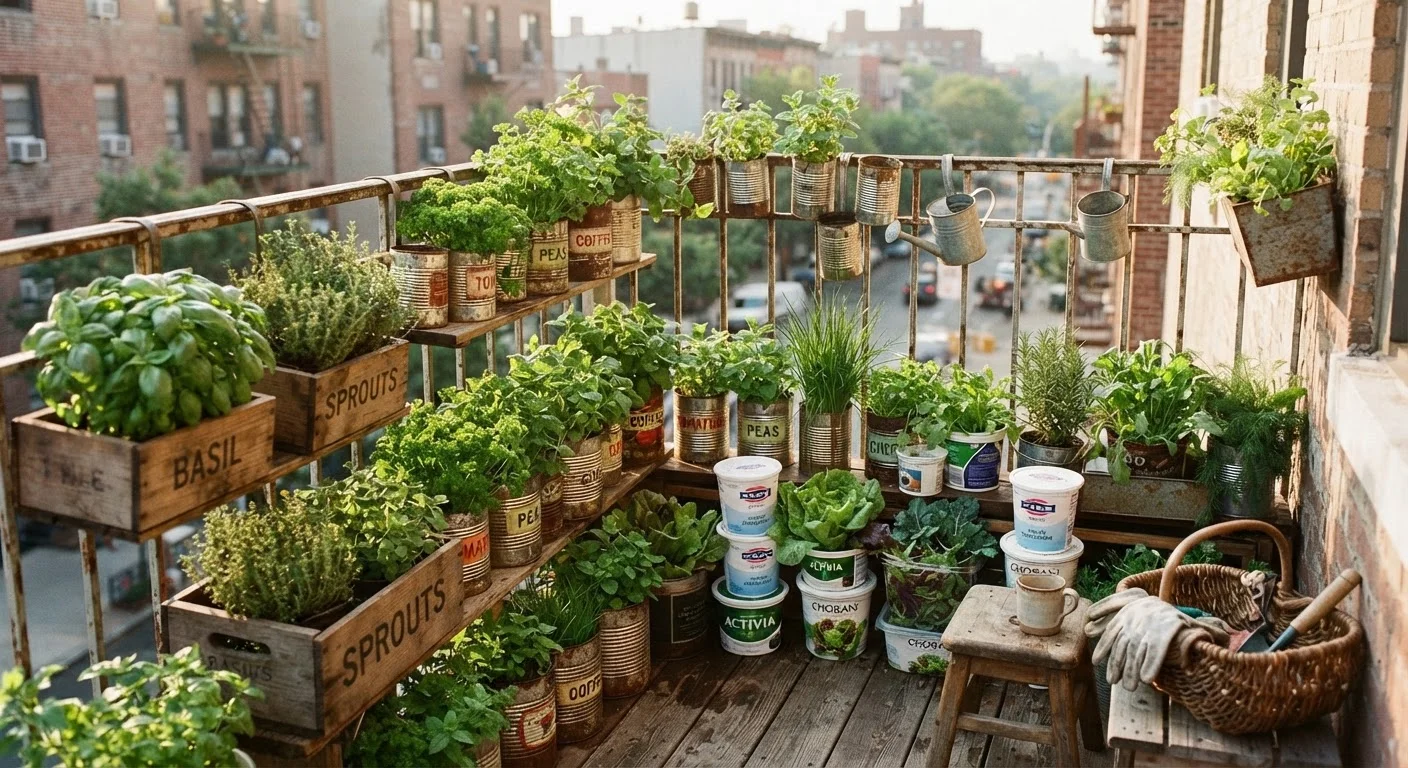
Containers don't need to be purpose-built. Almost any vessel that holds soil and drains water can grow food. Consider what you already have or can easily obtain:
- Tin cans and glass jars — ideal for herbs and green onions
- Wooden crates and pallets — often free from grocery stores or hardware retailers; line with burlap for growing greens
- Plastic bottles (2-liter) — cut horizontally to make self-watering planters
- Old colanders, buckets, or broken coolers — drainage is already built in or easy to add
- Yogurt and takeout containers — perfect seed-starting trays
The key requirement is drainage. If your container doesn't have holes in the bottom, roots will sit in waterlogged soil and rot. Use a nail or drill to add a few holes before filling with soil.
If you're renting and want more structured container options without permanent modifications, our guide to container gardening in rental spaces covers setups that work on balconies and patios without risking your lease.
Building Decent Soil Without Spending Much
Plants need soil that drains well, holds some moisture, and contains nutrients. You don't need to buy a premium bag to achieve this. A basic mix you can build at home:
- Garden soil or topsoil — if you have access to a yard, free. If not, a small bag of basic topsoil is far less expensive than potting mix.
- Compost — kitchen scraps, coffee grounds, and vegetable peels break down into rich organic matter. Even a small container compost setup produces usable material within a few months. See our full guide on composting at home for how to get started.
- Leaf mold or shredded leaves — free from your yard or a neighbor's. Fallen leaves layered into soil improve texture significantly over time.
For a deeper dive into free soil amendment options — including coffee grounds, cardboard mulch, and wood ash — our article on low-cost ways to enrich garden soil covers the most effective methods with honest trade-offs. And if you're ever tempted by an expensive potting mix at the garden center, this article explains why it's often unnecessary.
The coffee grounds hack actually works
Used coffee grounds add nitrogen to soil and improve drainage when mixed in — and most coffee shops will give them away for free if you ask. Don't apply them thickly as a surface layer, though; mixed into soil or compost they're far more effective and won't form a water-repelling crust.
Which Crops Give You the Most Return for the Least Effort
Not all vegetables are worth growing when you're starting from scratch on a budget. High-effort crops that take months to produce (like full-size tomatoes) can demoralize beginners. These crops tend to deliver fast, reliable results with minimal inputs:
- Lettuce and salad greens: Ready in 30–45 days, can be harvested leaf by leaf over weeks, and grow happily in shallow containers.
- Radishes: The classic beginner crop — ready in as little as 3 weeks, and they improve soil as they grow.
- Green onions: Regrow from kitchen scraps in a glass of water. Virtually no cost.
- Herbs (basil, parsley, chives): Expensive to buy fresh, cheap to grow, and usable for months from a single plant.
- Bush beans: Direct-sow, no staking required, productive in small spaces.
For strategic planting layouts that maximize yield from limited space, see our article on space-efficient planting strategies. Knowing when to plant each crop is equally important — our seasonal planting calendar for beginners removes the guesswork.
Keeping Your Garden Going Without Ongoing Costs
The real economy of a food garden emerges over time — but only if you build habits that reduce or eliminate recurring costs.
Save seeds: Let a few lettuce plants bolt, allow a bean to dry on the vine, or scoop and dry seeds from a pepper or tomato. Store them in a labeled envelope in a cool, dry place. Most vegetable seeds remain viable for one to three years, sometimes longer.
Compost continuously: Kitchen scraps become next season's soil amendment. Even a small bucket under the sink collects enough material to meaningfully enrich your containers over a growing season.
Collect rainwater where permitted: Check local regulations — many US municipalities allow residential rainwater collection. A simple bucket under a downspout reduces your watering costs to zero during rainy periods.
Mulch: A thin layer of shredded leaves or straw on top of soil reduces evaporation dramatically, cutting how often you need to water.
Once your garden is established, you can focus on refining it rather than funding it. Our guide to building a low-maintenance garden covers design strategies that reduce the ongoing time and money your garden needs to thrive.
Frequently Asked Questions
Yes, in many cases. Kitchen scraps like green onion roots and herb stems can be regrown in water or basic soil. Seeds sourced from neighbors, community groups, or seed libraries cost nothing. If you already have any container and outdoor light, you have enough to begin.
Lettuce, radishes, green onions, bush beans, and most herbs thrive in containers. They have shallow root systems, mature quickly, and tolerate the variable conditions common in repurposed pots. See our <a href="/smart-home-fixes/garden-on-a-budget/container-gardening-in-rental-spaces-making-it-work-without-permanent-changes">container gardening guide</a> for setup tips.
Coffee grounds, crushed eggshells, composted kitchen scraps, and fallen leaves all improve soil texture and nutrient content. Our guide on <a href="/smart-home-fixes/garden-on-a-budget/free-and-low-cost-ways-to-enrich-garden-soil-without-buying-fertiliser">enriching soil for free</a> walks through the most effective methods.
Timing depends on your climate zone and the crop. Cool-season crops like lettuce and spinach go in early spring or fall; warm-season crops like tomatoes need frost-free conditions. Our <a href="/smart-home-fixes/garden-on-a-budget/a-seasonal-planting-calendar-for-first-time-food-gardeners">seasonal planting calendar</a> breaks this down by crop and season.
Let a few plants go to seed at the end of the season, collect the dried seeds, and store them in a cool, dry envelope. Most vegetable seeds remain viable for one to three years when stored correctly, eliminating the need to repurchase annually.
No. A sunny windowsill, balcony, or small patio is enough space for a productive herb and salad garden. Renters and apartment dwellers can grow meaningful amounts of food using containers without making permanent changes to the property.
The content provided on our blog site traverses numerous categories, offering readers valuable and practical information. Readers can use the editorial team’s research and data to gain more insights into their topics of interest. However, they are requested not to treat the articles as conclusive. The website team cannot be held responsible for differences in data or inaccuracies found across other platforms. Please also note that the site might also miss out on various schemes and offers available that the readers may find more beneficial than the ones we cover.