

Our Verdict
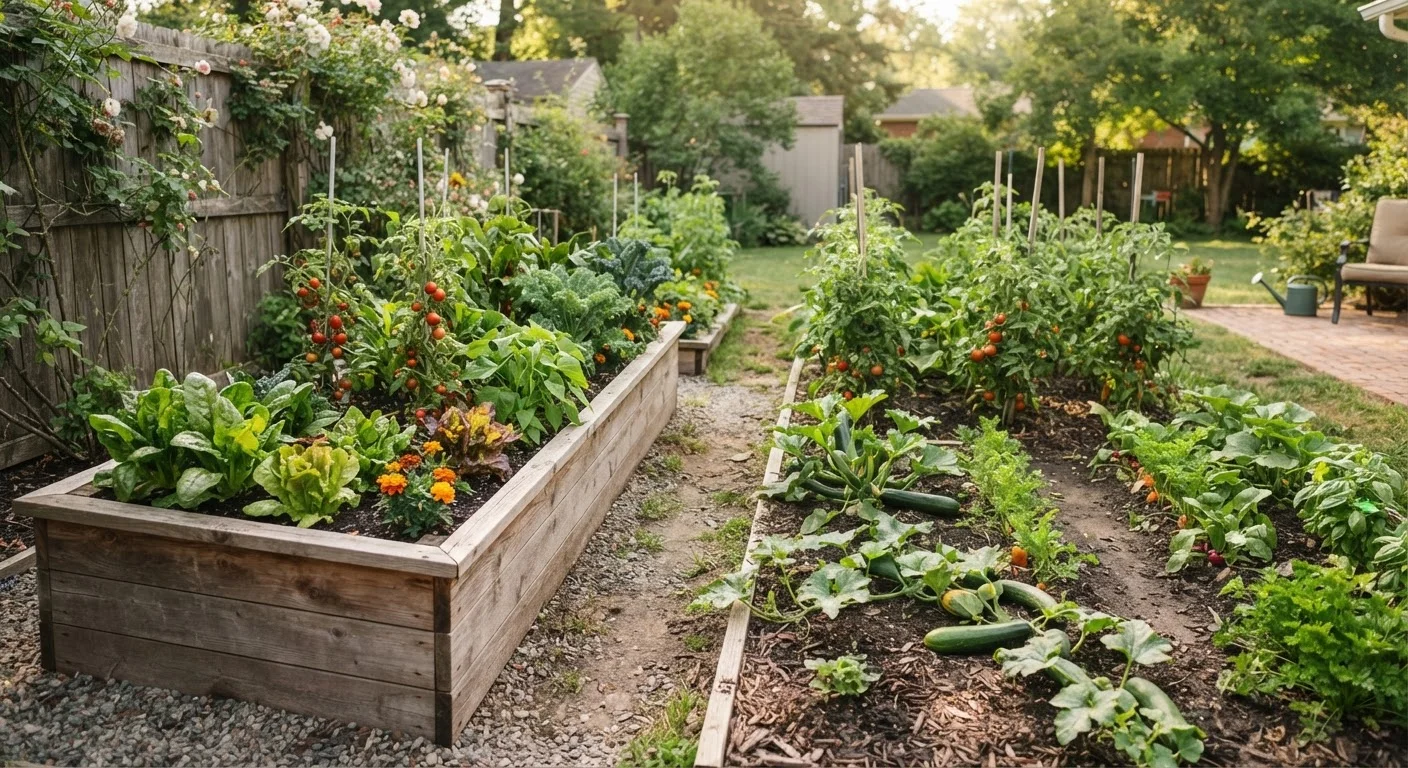
In-ground plots win on startup cost when native soil is decent, requiring little more than a shovel and some compost. Raised beds cost more upfront but can save money on weeding labor and soil amendments over multiple seasons, especially on rocky or compacted ground. Neither setup is universally cheaper — the right choice depends on what you're starting with.
| Best for | Recommended |
|---|---|
| Gardeners with decent native soil and almost no startup budget | In-Ground Plot |
| Those dealing with poor, rocky, or contaminated ground | Raised Bed |
| Small-space renters or those wanting defined, tidy growing areas | Raised Bed |
| Gardeners prioritizing long-term, low-effort maintenance over years | In-Ground Plot |
Startup Costs: What You're Actually Paying For
The single biggest difference between these two approaches shows up before you plant a single seed. An in-ground plot can cost as little as $0 if you already own a shovel and your soil is workable. You clear the area, loosen the earth, mix in compost, and start growing. Even a generous bag of compost runs $15–$25, making this one of the most accessible entry points in gardening.
Raised beds are a different story. A basic 4×8-foot wooden frame made from untreated lumber typically costs $40–$80 in materials — more if you choose rot-resistant cedar. Then there's soil: filling a 4×8×12-inch bed requires roughly 16 cubic feet of growing mix, which can cost $60–$120 depending on whether you buy bagged mix or source bulk materials. That means a single modest raised bed can run $100–$200 before you plant anything.
For context on keeping those soil costs down, see our guide on affordable growing mixes — premium bagged products are rarely necessary.
| In-Ground Plot | Raised Bed | |
|---|---|---|
| Typical startup cost | $0–$30 (good soil) | $100–$200 per 4×8 bed |
| Soil control | Depends on native soil quality | Full control, import custom mix |
| Weed pressure | Higher, especially early on | Lower with good base layer |
| Drainage | Variable, site-dependent | Reliable, consistently good |
| Annual top-up cost | Low if soil is healthy | Modest compost addition needed |
| Longevity of structure | Indefinite (no structure) | 5–15 years depending on material |
| Best for poor/contaminated soil | Not recommended without heavy amendment | Strong choice for a clean start |
Soil, Drainage, and the Hidden Costs of Your Site
Your existing ground conditions can flip the cost equation entirely. If your yard has clay-heavy, compacted, or contaminated soil, in-ground growing demands significant amendment investment before it performs reliably. Multiple bags of compost, gypsum for clay, or organic matter can push first-year in-ground costs close to a small raised bed anyway — without the structural benefit.
Raised beds let you import exactly the soil blend you want, bypassing whatever challenges exist below. On difficult sites — heavy clay, gravel fill from construction, or soil near old painted structures — this controlled environment can prevent a frustrating and costly first season. Drainage is also reliably better in raised beds, reducing root rot risk and the need for corrective amendments down the line.
That said, if your native soil is loamy and rich, amending it in-ground is straightforward and inexpensive. A soil test (often available through local extension offices for under $20) is a worthwhile early investment that tells you exactly what amendments you actually need — rather than guessing and overspending.
Year-Over-Year Maintenance: Where the Numbers Even Out
Annual upkeep costs tend to converge between the two systems over time. Both setups need seasonal compost additions, mulch to retain moisture, and periodic watering. In-ground plots generally need more frequent weeding, especially in the first one to two years before ground cover and mulching suppress weed seed germination. That time cost is real, even if it doesn't show up on a receipt.
Raised beds lose soil volume slowly each season as organic matter breaks down, meaning you'll top up with a few bags of compost or aged material annually — a modest but recurring cost. Wooden frames also have a lifespan: untreated pine may need replacing in five to seven years, while cedar can last considerably longer. Factor in that future replacement cost when comparing total value.
Water efficiency is roughly similar, though raised beds warm up faster in spring and may dry out more quickly in summer heat, potentially increasing irrigation needs. Mulching both setups generously is the most effective way to control that variable without spending on drip systems.
To maximize returns regardless of which setup you choose, pairing either approach with smart plant selection helps. Our piece on annual vs. perennial vegetables explains how choosing the right plant types stretches your growing budget further season after season.
Making the Call: Practical Guidance for Budget Growers
Start by walking your potential garden space. If the soil crumbles and drains well, an in-ground plot is likely your most cost-effective path. If it's hard-packed, stays waterlogged, or you have any concern about soil history (older urban lots, near former structures), a raised bed gives you a clean, controlled start that avoids potentially costly remediation.
If budget is the primary constraint, consider a hybrid: define a ground-level growing area with a simple single-board border (just a few inches high), improve the native soil with compost, and mulch heavily. This costs a fraction of a full raised bed while still creating a defined, organized growing zone with slightly improved drainage.
Space-efficiency matters too — especially for small yards or patios. Our guide to space-efficient planting strategies pairs well with either setup and helps you extract maximum yield from whatever footprint you have.
Whichever direction you choose, the real savings come from starting modest, learning your specific conditions, and expanding intentionally. For more on reducing ongoing garden effort and cost, see our guide to building a low-maintenance garden. And when you're ready to plant, don't overlook the decision covered in our breakdown of seeds vs. transplants — it's one of the most impactful cost choices you'll make each season.
The content provided on our blog site traverses numerous categories, offering readers valuable and practical information. Readers can use the editorial team’s research and data to gain more insights into their topics of interest. However, they are requested not to treat the articles as conclusive. The website team cannot be held responsible for differences in data or inaccuracies found across other platforms. Please also note that the site might also miss out on various schemes and offers available that the readers may find more beneficial than the ones we cover.