

What Plants Actually Need From Soil
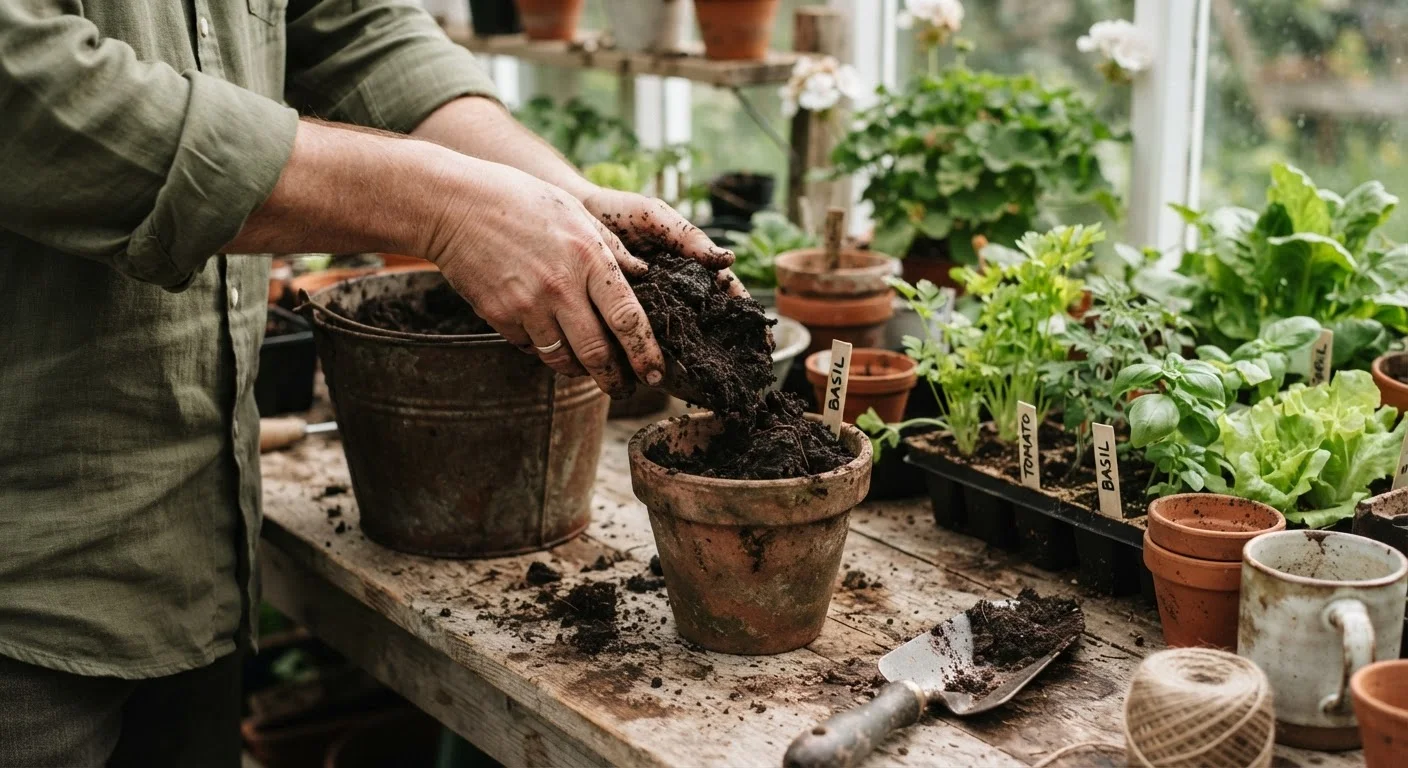
Before debunking the myths around potting mix pricing, it helps to understand what roots are actually asking for. Plants need three things from their growing medium: structure (something to anchor roots), air (oxygen reaches roots through pore space), and nutrients (available in water-soluble form). That's it. No proprietary blend required.
Premium potting mixes often add slow-release fertiliser pellets, moisture-retaining crystals, or branded 'microbe boosters.' These aren't harmful, but they're frequently overpriced for what they deliver — and in many cases, they can be replicated for a fraction of the cost using materials you already have access to. If you're just starting a food garden on a shoestring, understanding soil basics saves you real money before you even plant your first seed.
Myth
You need premium potting mix for container plants to thrive.
Fact
Plants need drainage, aeration, and basic nutrition — qualities achievable with inexpensive DIY blends.
Premium bags earn their price largely through marketing, packaging, and added convenience. The core materials — compost, perlite, and a base medium — are individually inexpensive and widely available. A homemade blend using these components in the right ratios delivers equivalent or better results for most container plants, because you control the drainage and nutrient profile rather than accepting a generic formula.
Myth
More expensive soil means fewer problems with pests and disease.
Fact
Price does not determine pathogen load; sterility and drainage practices matter far more.
Soil-borne pests and fungal diseases thrive in waterlogged, poorly aerated conditions regardless of what you paid for the bag. A dense, moisture-retaining premium mix can actually create worse conditions than a lighter, cheaper blend with good drainage. The key preventive factor is structure — not price. Allowing soil to partially dry between waterings and ensuring pots have drainage holes reduces disease pressure far more than any premium additive.
Myth
Bagged mixes labelled 'organic' are automatically better for plants.
Fact
'Organic' on a potting mix label describes ingredient sourcing, not plant performance.
Certified organic potting mixes use ingredients free from synthetic chemicals, which can matter for edible growing or personal values. But 'organic' doesn't guarantee better drainage, nutrient balance, or microbial activity. Homemade compost from kitchen scraps is technically organic and often outperforms bagged alternatives because it's fresher and locally adapted. The label is useful context, not a performance guarantee.
Myth
Garden soil dug from your yard is too poor to use in containers.
Fact
Native soil can work in containers when amended correctly — it just needs improved drainage and nutrition.
Pure garden soil in a container does compact over time, which restricts root growth. But blended with compost and perlite at roughly equal thirds, it becomes a highly functional growing medium at minimal cost. The exception is clay-heavy soil, which needs more amendment to prevent compaction. Test your native soil texture before dismissing it: loamy or sandy soils mix particularly well into container blends without significant investment.
Myth
Moisture-retaining crystals in premium mixes are essential for busy gardeners.
Fact
Proper watering technique and the right pot size reduce moisture stress without any additives.
Hydrogel crystals sold in premium mixes can extend watering intervals slightly, but they're no substitute for sound watering habits. Oversized pots relative to plant size hold excess moisture that promotes root rot. Self-watering containers with reservoir bases achieve longer intervals more reliably than crystals. Developing consistent watering habits costs nothing and is more effective long-term.
Building Your Own Affordable Mix
A reliable all-purpose container mix can be built from three inexpensive components:
- Compost (roughly 40%): Supplies nutrients and beneficial microbial activity. Homemade is ideal; municipal compost is often free or low-cost.
- Topsoil or garden soil (roughly 40%): Adds weight and structure. Avoid soil dug directly from compacted areas.
- Perlite or coarse sand (roughly 20%): Keeps the mix aerated and well-draining, which prevents root rot.
For seed starting, drop the topsoil and increase compost, using a finer texture. For cacti or succulents, flip the ratio — more sand or grit, less compost. Matching the mix to the plant's needs beats any one-size-fits-all premium bag. You can also explore free ways to enrich soil naturally — from coffee grounds to leaf mould — to keep your DIY mix performing season after season.
3–5×
Price difference: premium vs. basic potting mix
Retail comparisons across U.S. garden centres consistently show premium branded mixes cost three to five times more per cubic foot than basic alternatives with comparable base ingredients.
~$0
Cost of homemade compost as a soil amendment
Composting kitchen and garden waste at home produces a nutrient-rich amendment at no material cost beyond a bin and time, according to U.S. composting extension programs.
If you're working with raised beds, the calculation shifts slightly — see how raised beds compare to in-ground plots for total soil costs. Either way, understanding your medium prevents the biggest rookie mistake: buying expensive soil and then overwatering it into a compacted, anaerobic mess. For watering guidance, our piece on watering habits that quietly kill plants is worth reading alongside this one.
The content provided on our blog site traverses numerous categories, offering readers valuable and practical information. Readers can use the editorial team’s research and data to gain more insights into their topics of interest. However, they are requested not to treat the articles as conclusive. The website team cannot be held responsible for differences in data or inaccuracies found across other platforms. Please also note that the site might also miss out on various schemes and offers available that the readers may find more beneficial than the ones we cover.